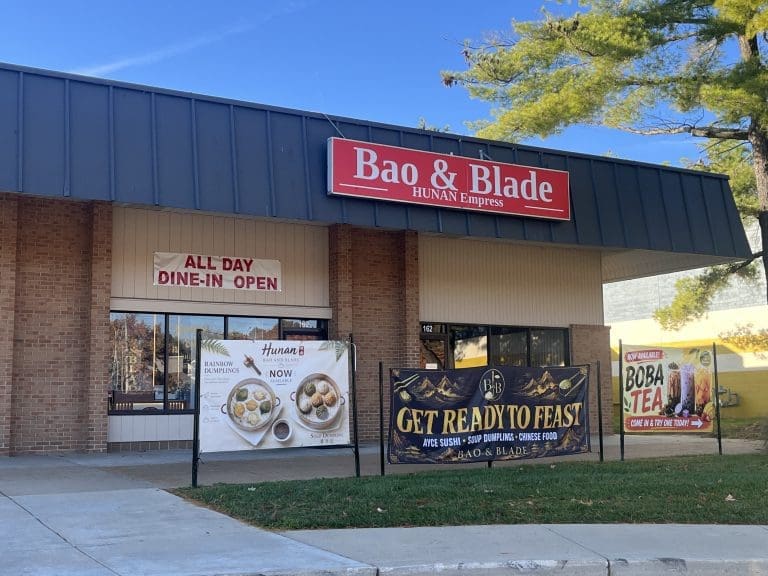

CHESTERFIELD, MO – November 18, 2026 (StLouisRestaurantReview) After 38 years of serving Chinese cuisine in Chesterfield, the longtime Hunan Empress restaurant has entered a new chapter as Bao & Blade, introducing an expanded menu featuring handmade soup dumplings, steamed buns, sushi, and an all-you-can-eat dining experience.
Located at 162 Four Seasons Shopping Center, the restaurant has undergone a significant transformation while preserving the traditional Chinese dishes that helped establish its reputation throughout the St. Louis metropolitan area.
The rebranding officially took place on October 5, 2026, but the restaurant’s evolution began well before the name change.
In fact, St. Louis Restaurant Review documented substantial improvements to Hunan Empress during a firsthand restaurant visit in July 2024, more than two years before the Bao & Blade name was introduced.
That earlier visit provides valuable historical context for understanding how an established Chinese restaurant has evolved into a broader Asian dining concept.
The transformation also shows how independent restaurants can modernize operations, expand menus, and attract new customers without abandoning the history that helped make them successful.
Hunan Empress: A Chesterfield Restaurant Since 1988
Hunan Empress opened in 1988 and became a familiar dining destination for residents of Chesterfield and surrounding West St. Louis County communities.
The restaurant specialized in Chinese cuisine, offering a substantial menu influenced by multiple regional cooking traditions.
Its longtime selections included Mongolian beef, moo shoo pork, General Tso’s chicken, fried rice, seafood specialties, and numerous beef, chicken, pork, and vegetable dishes.
The menu also featured traditional American-Chinese restaurant favorites that appealed to customers seeking familiar flavors, generous portions, and convenient dining options.
Among the restaurant’s signature offerings was Four Musketeers, a combination of beef, scallops, prawns, chicken, and vegetables prepared in a chef’s special sauce.
For many years, Hunan Empress operated as a traditional Chinese restaurant serving dine-in customers, carryout orders, and families looking for a dependable neighborhood dining option.
Its longevity is noteworthy.
The restaurant industry is highly competitive, and independent establishments must continually respond to changes in operating expenses, customer preferences, and local competition.
A restaurant that remains in business for nearly four decades becomes part of a community’s commercial history.
Hunan Empress achieved that longevity before beginning the transformation that ultimately produced Bao & Blade.
St. Louis Restaurant Review Visited Hunan Empress in 2024
One of the most important elements of this story is that St. Louis Restaurant Review had already documented the restaurant’s improvements well before its latest rebranding.
On July 11, 2024, the editorial staff of St. Louis Restaurant Review visited Hunan Empress for lunch.
At the time, the restaurant had mixed online customer ratings, creating questions about whether those reviews accurately reflected the dining experience.
Rather than relying solely on internet ratings, the publication visited the restaurant and evaluated the establishment firsthand.
The experience was overwhelmingly positive.
The restaurant had undergone substantial remodeling, introducing marble floors, marble walls, and attractive Chinese furnishings.
The improvements created an upscale atmosphere that stood out among Chinese restaurants throughout the St. Louis region.
The food also made a favorable impression.
Portions were generous, the food quality was excellent, and the service was impressive.
Following that visit, St. Louis Restaurant Review added Hunan Empress to its restaurant directory.
The publication documented its findings in a July 12, 2024, article titled Hunan Empress Added to Restaurant Directory.
That original report is especially relevant today because it establishes that the restaurant’s physical improvements were already underway more than two years before the introduction of Bao & Blade.
The new restaurant concept did not emerge from a completely unchanged establishment.
Instead, the transformation followed a period during which the dining room had already received substantial attention.
The 2024 visit also demonstrated why firsthand restaurant reporting can provide valuable information that online ratings alone cannot capture.
A January 2025 Follow-Up Documented Its Reputation
St. Louis Restaurant Review continued documenting Hunan Empress after its 2024 visit.
A separate restaurant profile, Hunan Empress – Chesterfield, MO, included updated customer ratings and additional observations about the restaurant’s atmosphere and reputation.
As of January 4, 2025, the publication documented the following online ratings:
- Google: 4.1 stars from 249 reviews.
- Yelp: 3.5 stars from 93 reviews.
- Tripadvisor: 4 out of 5 from 34 reviews.
- DoorDash: 4.8 stars from 50 votes.
- Grubhub: 3.9 stars from 19 votes.
These figures represent historical snapshots from January 2025, not current ratings for Bao & Blade.
The report also noted that Hunan Empress had received recognition through Nextdoor’s Neighborhood Fave program.
At the time, the publication remained impressed by the restaurant’s remodeled interior, food, portions, and service.
The historical reviews also revealed an important challenge for established restaurants: customer ratings can reflect experiences accumulated over many years, including periods before significant improvements or management changes.
That challenge may be relevant to Bao & Blade as it establishes its new identity.
A new restaurant name provides an opportunity to introduce customers to a different experience, but the restaurant must still earn its reputation through consistent food quality, service, and customer satisfaction.
The earlier St. Louis Restaurant Review coverage provides a documented timeline showing that the restaurant’s modernization began before the current rebranding.
Three Generations of Women-Led Restaurant Ownership
Another significant aspect of Bao & Blade’s history is its connection to three generations of women-led family restaurant ownership.
According to published reporting about the new concept, the business continues under the same family ownership associated with Hunan Empress.
Co-owner Feng Yu has been identified as an important figure in the transformation.
The new concept aims to modernize the restaurant’s offerings while preserving the Chinese dishes longtime customers recognize.
The family history adds another dimension to the story.
For independent restaurant operators, the decision to make substantial changes to an established business can be difficult.
A restaurant name may carry decades of customer recognition.
Longtime patrons often associate a particular establishment with specific dishes, traditions, and personal experiences.
Changing that identity creates opportunities to attract new customers, but it also carries the risk of confusing or alienating established patrons.
Bao & Blade appears to be addressing that challenge by retaining the original Chinese menu while adding new culinary categories.
The result is a restaurant that can serve customers looking for familiar Hunan Empress favorites alongside those interested in sushi, dumplings, and other Asian dishes.
Why the Name Bao & Blade?
The restaurant’s new name reflects two major elements of its expanded menu.
Bao represents the Chinese steamed buns and dumplings that have become central to the new concept.
Blade refers to the knife skills and preparation techniques associated with sushi.
Together, the words communicate a broader Asian dining experience than the original name, Hunan Empress.
The name also reflects a different marketing strategy.
Hunan Empress was recognizable as a traditional Chinese restaurant.
Bao & Blade introduces an identity that can encompass Chinese cuisine, Japanese sushi, handmade dumplings, and other Asian-inspired selections.
This broader positioning allows the restaurant to appeal to customers with different dining preferences.
It also creates opportunities for groups whose members may want different types of food.
A family might include someone interested in traditional Chinese cuisine, another person looking for sushi, and someone else wanting to try soup dumplings.
Bao & Blade brings those options together in one location.
Handmade Soup Dumplings Become a Featured Attraction
Among Bao & Blade’s most notable additions is its selection of handmade soup dumplings.
Soup dumplings, commonly associated with the Chinese dish xiaolongbao, feature delicate wrappers enclosing savory fillings and broth.
They offer a different experience from conventional dumplings because the broth is contained inside the wrapper.
Bao & Blade features several varieties, including pork, shrimp, beef, and chicken soup dumplings.
Other offerings include chili-oil wontons and pan-fried pork buns.
These dishes expand the restaurant’s appeal beyond its traditional Chinese-American entrees.
Dumplings are particularly suited to shared dining because customers can order multiple varieties and sample different fillings.
They also fit naturally into the restaurant’s new all-you-can-eat program.
Rather than ordering only one entree, customers can explore several menu selections during a single visit.
For diners unfamiliar with soup dumplings, the new menu offers a chance to try a dish that differs considerably from many conventional American-Chinese restaurant offerings.
Sushi Adds Another Major Menu Category
Sushi is the other defining component of Bao & Blade’s new identity.
The restaurant offers more than 20 varieties of sushi rolls, along with nigiri and sashimi.
Selections include traditional sushi combinations and specialty rolls featuring additional ingredients and sauces.
One distinctive offering is the St. Louis roll, described as combining salmon, honey cheese, crab, and eel sauce.
The restaurant also offers Japanese-inspired hot dishes, giving customers additional options if they prefer cooked entrees.
The expanded sushi menu changes the restaurant’s competitive position within the Chesterfield dining market.
Previously, Hunan Empress primarily competed with other Chinese restaurants.
Under the Bao & Blade concept, it can also appeal to customers searching for sushi restaurants, dumpling specialists, and all-you-can-eat Asian dining.
However, the expanded menu also introduces operational challenges.
Preparing traditional Chinese dishes, handmade dumplings, and sushi requires different techniques, ingredients, equipment, and kitchen procedures.
Maintaining consistency across those categories will be important as the restaurant develops its new reputation.
All-You-Can-Eat Dining Introduces a Different Experience
One of Bao & Blade’s biggest changes is introducing an all-you-can-eat program featuring sushi and dumplings.
The program allows customers to order from participating menu selections for a fixed price.
Published menu information lists adult weekday lunch pricing at $19.99 and adult dinner and weekend pricing at $29.99.
Children’s pricing varies by age.
Customers should confirm current pricing, participating menu items, and restaurant policies before ordering because prices and promotions may change.
The fixed-price format offers a different dining experience from the restaurant’s traditional à la carte menu.
Customers interested in exploring multiple sushi rolls or dumpling varieties can sample different selections without purchasing each as a separate full-priced entree.
For families and groups, that flexibility may be attractive.
From a restaurant management perspective, however, all-you-can-eat dining requires careful planning.
Food costs, portion sizes, kitchen productivity, and waste management can significantly affect profitability.
The format must deliver perceived value to customers while allowing the restaurant to maintain sustainable operations.
Bao & Blade’s decision to introduce this model illustrates how established restaurants are experimenting with different approaches to attracting customers.
The Original Hunan Empress Menu Remains
Despite the new name and expanded offerings, Bao & Blade continues serving traditional Chinese dishes associated with Hunan Empress.
Customers can still order familiar selections such as Mongolian beef, moo shoo pork, and other Chinese entrees.
The Four Musketeers specialty also remains part of the restaurant’s culinary heritage.
Preserving these dishes is an important part of the transition.
Longtime customers may have visited Hunan Empress for years because of a particular favorite.
Eliminating those dishes could have discouraged repeat business.
By maintaining the established menu, Bao & Blade can introduce new dining experiences without forcing existing customers to abandon familiar choices.
The strategy also creates opportunities for gradual experimentation.
A customer visiting for Mongolian beef might decide to add soup dumplings to their order.
Someone ordering sushi might discover one of the restaurant’s traditional Chinese specialties.
The combination allows the business to introduce new foods while retaining the customer relationships built over decades.
Renovations Connect the Past With the Present
The restaurant’s interior transformation is another important part of its story.
Published reporting indicates that improvements were introduced gradually over approximately two years.
The contemporary dining room includes marble-look surfaces, tan seating, decorative ceiling treatments, and Chinese-inspired artwork.
A visible sushi-and-dumpling preparation counter adds a new element to the dining experience.
Customers can observe portions of the preparation process, reinforcing the restaurant’s emphasis on made-to-order sushi and handmade dumplings.
What makes this especially noteworthy is the timeline St. Louis Restaurant Review documented.
The publication’s July 2024 visit confirmed that significant remodeling had already occurred.
That means the current Bao & Blade appearance should be understood as part of an extended period of improvement rather than a transformation completed entirely in October 2026.
The distinction matters because it provides a more accurate account of the restaurant’s development.
The name changed in October, but the effort to modernize the establishment began earlier.
Bubble Tea Expands the Beverage Menu
Bao & Blade has also introduced bubble tea and specialty beverages.
The expanded selections include brown sugar milk tea, taro milk tea, passion fruit tea, and lychee fruit tea.
Bubble tea adds another category to the restaurant’s broader Asian dining experience.
It also offers customers alternatives to traditional restaurant beverages.
Specialty drinks can complement sushi, dumplings, and other menu items while providing additional opportunities for customer purchases.
For younger diners and families, the beverage selection may be another reason to visit.
The addition reinforces the restaurant’s effort to create a dining experience built around variety rather than a single culinary tradition.
What Bao & Blade Means for Chesterfield Dining
Bao & Blade’s transformation comes during a challenging period for independent restaurants.
Across the restaurant industry, operators continue confronting food costs, labor expenses, insurance, utilities, and changing customer spending habits.
Competition is also significant.
Customers can choose among independent restaurants, national chains, fast-casual establishments, delivery services, and numerous international cuisines.
For a restaurant established in 1988, adapting to these conditions requires balancing longtime customers’ expectations with newer generations’ preferences.
Bao & Blade represents one approach to that challenge.
Rather than abandoning its existing operation, the restaurant has expanded its culinary offerings and introduced a different dining format.
The new concept may attract customers who previously wouldn’t have considered Hunan Empress when looking for sushi or soup dumplings.
At the same time, the retained Chinese menu gives longtime patrons a reason to return.
The strategy is not without risk.
An expanded menu increases complexity, and customers will ultimately judge the restaurant on food quality, service, consistency, and value.
Nevertheless, the rebranding shows how a longstanding independent restaurant can try to stay relevant without completely severing its connection to the past.
A Restaurant St. Louis Restaurant Review Has Followed for Years
For St. Louis Restaurant Review, Bao & Blade’s transformation is particularly interesting because the publication documented the restaurant’s improvements before the rebranding occurred.
The July 2024 visit provided firsthand observations of the food, service, portions, and renovated interior.
The January 2025 restaurant profile preserved additional information about customer ratings and the establishment’s reputation.
Those earlier reports now serve as historical references for understanding the restaurant’s development.
The new Bao & Blade concept adds another chapter to that history.
While the name and menu have changed, the location remains familiar, and traditional Chinese dishes continue to be served.
The transformation also illustrates why following independent restaurants over time provides greater insight than reporting only on openings and closings.
Restaurants are constantly evolving.
Some changes are highly visible, such as a new name or redesigned dining room.
Others occur gradually through menu adjustments, management decisions, equipment investments, and changes in customer service.
Hunan Empress’s transition into Bao & Blade demonstrates how those changes can accumulate over several years before producing an entirely new restaurant identity.
Bao & Blade Restaurant Information
Restaurant: Bao & Blade
Former name: Hunan Empress
Original establishment: 1988
Rebranding date: October 5, 2026
Address: 162 Four Seasons Shopping Center, Chesterfield, MO 63017
Phone: (314) 878-8828
Cuisine: Chinese, sushi, handmade dumplings, steamed buns, and other Asian-inspired dishes
Dining options: À la carte menu and all-you-can-eat sushi and dumplings
Reported hours:
- Tuesday through Thursday: 10:30 a.m. to 9:30 p.m.
- Friday and Saturday: 10:30 a.m. to 10 p.m.
- Sunday: 11:30 a.m. to 9:30 p.m.
Confirm Monday hours directly with the restaurant, as published listings differ.
Customers are encouraged to verify current hours, pricing, and menu availability before visiting.
A New Name With Nearly Four Decades of History
Bao & Blade represents more than another restaurant opening in Chesterfield.
It continues a business that has served the community since 1988.
The transformation introduces handmade soup dumplings, sushi, bubble tea, a contemporary dining environment, and an all-you-can-eat program while preserving the Chinese dishes that helped establish Hunan Empress.
For longtime customers, the restaurant offers an opportunity to revisit a familiar location and experience its latest changes.
For new customers, Bao & Blade introduces a broader Asian dining concept with multiple menu categories.
For St. Louis Restaurant Review, the transformation offers an opportunity to revisit a restaurant the publication first evaluated in person in July 2024.
The earlier positive dining experience, subsequent historical coverage, and current rebranding together tell a larger story about the evolution of an independent restaurant.
After 38 years, Hunan Empress has a new name and an expanded vision.
The next chapter belongs to Bao & Blade.
St. Louis Restaurant Review covers independent restaurants, dining trends, restaurant openings, and business developments throughout the St. Louis metropolitan area. Its firsthand observations of Hunan Empress refer to the July 11, 2024, visit and should not be interpreted as a new evaluation of Bao & Blade’s current food or service.
Martin Smith is the founder and Editor-in-Chief of St. Louis Restaurant Review, STL.News, USPress.News, and STL.Directory. He is a member of the United States Press Agency (ID: 31659) and the US Press Agency.


