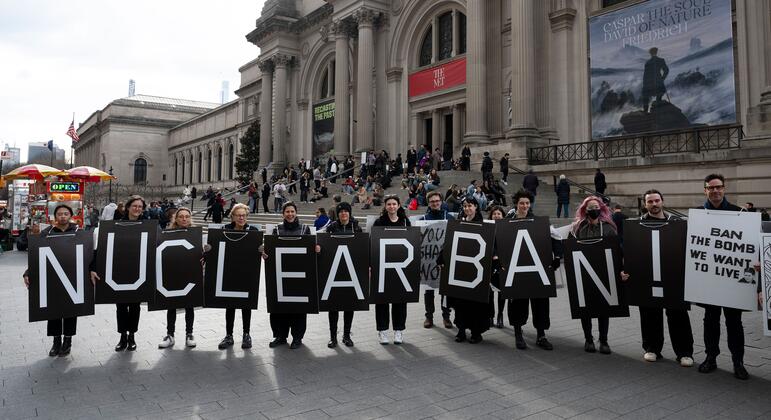

As Warheads Proliferate, Decades-Old Nuclear Weapons Treaty Must Evolve: UN Chief’s Warning
Introduction
The global landscape of nuclear weapons has shifted dramatically over the past few decades. With the proliferation of warheads and the emergence of new technologies, the need for effective disarmament strategies has never been more pressing. Recently, the UN Secretary-General has issued a stark warning regarding the inadequacies of decades-old nuclear weapons treaties, demanding urgent revisions to adapt to the current geopolitical climate. This article delves into the complexities surrounding nuclear disarmament, the historic treaties in place, and the necessary evolution to prevent catastrophic consequences.
The Current State of Nuclear Proliferation
The Rise of Nuclear States
In the years since the Cold War, the number of nuclear-armed countries has expanded beyond the original nuclear powers, leading to increased tensions and a more unstable global environment. Nations such as North Korea have developed nuclear capabilities, raising alarms about regional security and the possibility of nuclear conflict. The UN Chief’s warning underscores the urgency of re-evaluating existing treaties to address these emerging threats.
Emerging Technologies and Non-State Actors
In addition to state actors, the rise of non-state actors has complicated the nuclear landscape. Digitization and advancements in technology have created new opportunities for cyberterrorism, which could compromise weapons systems and escalate conflicts. The irresponsibility of certain groups acquiring nuclear knowledge poses a significant risk. Hence, the treaties must be revisited to incorporate measures that address both state and non-state threats.
Historical Context of Nuclear Weapons Treaties
The Treaty on the Non-Proliferation of Nuclear Weapons (NPT)
The Treaty on the Non-Proliferation of Nuclear Weapons (NPT), which came into effect in 1970, remains the cornerstone of global nuclear disarmament efforts. Designed to prevent the spread of nuclear weapons while promoting peaceful uses of nuclear energy, the NPT has seen varying degrees of compliance. However, the treaty’s limitations in accommodating new developments in international relations have led to its functionality being called into question.
The Comprehensive Nuclear-Test-Ban Treaty (CTBT)
Adopted in 1996, the Comprehensive Nuclear-Test-Ban Treaty (CTBT) seeks to prohibit all nuclear explosions. While it has been signed by 185 nations and ratified by 170, major powers such as the United States and China have not yet ratified it. The Chief’s warning points to how the CTBT’s framework is now insufficient in the face of renewed arms races and technological advancements that were unimaginable at the time of its inception.
The Need for Evolution in Nuclear Treaties
Adapting to Modern Threats
As warheads proliferate, the next generation of treaties must incorporate modern challenges, including the cyber dimension of warfare and the grey areas surrounding new technologies like AI and space weaponization. The UN Secretary-General emphasizes that existing treaties must adapt to better acknowledge the realities of 21st-century warfare.
New Mechanisms for Verification and Accountability
Furthermore, the existing verification mechanisms need bolstering. The International Atomic Energy Agency (IAEA) plays a crucial role in monitoring compliance, yet the mechanisms in place must evolve to ensure greater accuracy and more stringent enforcement. The lack of accountability within the current framework is a breeding ground for non-compliance.
Challenges in Treaty Evolution
Political Will and National Interests
One of the primary obstacles in evolving nuclear treaties is the challenge of political will among nations. Countries prioritize their national security, often justifying their nuclear arsenals as a deterrence against potential threats. This mindset complicates discussions on disarmament, as nations fear losing their strategic advantages.
The Rise of Populism and Isolationism
Global political dynamics, marked by rising populism and isolationist sentiments, pose additional challenges. Nations are becoming more inward-focused, leading to fragmented global cooperation. This environment complicates collective efforts to strengthen disarmament initiatives.
The Role of Diplomacy in Treaty Reform
International Collaboration
The UN’s warning serves as a call to action for international cooperation in tackling nuclear proliferation. This means engaging in multi-faceted diplomacy that goes beyond mere negotiations. It requires countries to understand each other’s security concerns, paving the way for compromises and collaborative solutions.
Engaging Civil Society
Another crucial component is involving civil society in nuclear discussions. Grassroots movements and organizations can exert pressure on governments to enact reforms, fostering an environment where disarmament is seen as a priority.
Conclusion: A Call for Urgent Action
The urgency of updating decades-old nuclear weapons treaties cannot be overstated. As warheads proliferate and new technologies emerge, the foundational agreements designed to safeguard humanity must evolve. The UN Secretary-General’s warnings serve both as a call for re-evaluation and an opportunity for global leadership in mitigating nuclear threats.
The world stands at a crossroads; to ensure a safer future, countries must come together to promote disarmament, prioritize international collaboration, and adapt existing treaties to tackle the complexities of modern warfare. It is imperative that nations recognize the paramount threat of nuclear proliferation and take collective steps toward a sustainable and peaceful future.
SEO Optimization Insights
- Keywords: nuclear weapons, treaties, UN Secretary-General, disarmament, NPT, CTBT, proliferation, geopolitical landscape, accountability, international cooperation
- Meta description: Explore the urgent need for evolving nuclear weapons treaties as warheads proliferate. Learn about the implications of outdated agreements, modernization challenges, and the role of international diplomacy in disarmament efforts.
- Subheadings: Improve readability and SEO by breaking down the content with clear, informative subheadings.
- Internal Links: Consider linking to relevant articles about the NPT, CTBT, and historical perspectives on nuclear disarmament for enhanced user engagement.
By addressing these elements, the article can better rank in search engines while enriching the discourse surrounding nuclear disarmament.
For more details and the full reference, visit the source link below:
Read the complete article here: https://news.un.org/feed/view/en/story/2026/04/1167387