
Guterres Condemns Israeli Move to Militarize Seized Compound in Occupied East Jerusalem
Introduction
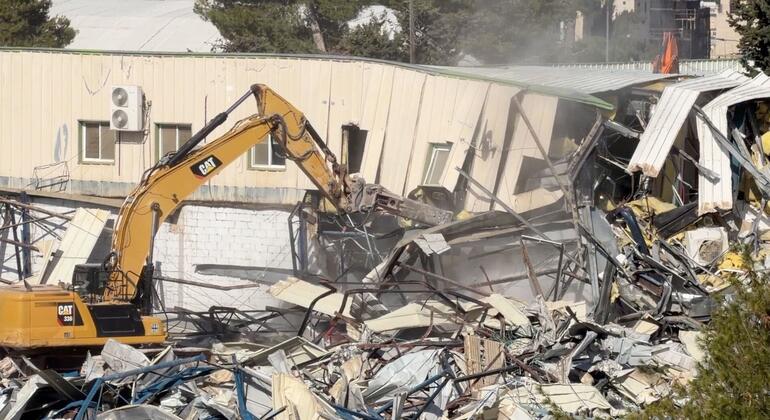
In recent developments, United Nations Secretary-General António Guterres has vocally condemned Israel’s decision to militarize a compound in East Jerusalem that has been under Israeli control since the 1967 Six-Day War. This controversial move raises significant concerns regarding international law, the status of Jerusalem, and the broader Israeli-Palestinian conflict. This article aims to explore the implications of this militarization, Guterres’s reaction, and the spotlight it places on the ongoing tensions in the region.
Background on East Jerusalem
Historical Context
East Jerusalem has been a focal point of contention between Israelis and Palestinians. Captured by Israel during the 1967 war, the area is home to significant religious sites important to Judaism, Islam, and Christianity. Internationally, East Jerusalem is generally recognized as occupied territory, and the majority of countries do not recognize Israel’s annexation of the area.
Current Status
The status of East Jerusalem remains one of the most contentious issues in peace negotiations between Israel and Palestine. The city is seen by Palestinians as their future capital, while Israel regards it as its undivided capital. This dichotomy complicates efforts toward achieving a lasting peace in the region.
Guterres’s Statement
Condemnation of Militarization
In a recent public address, Guterres criticized Israel’s decision to enhance military presence in the disputed compound, emphasizing that such actions violate international law and undermine trust in the possibility of a peaceful resolution to the conflict. He reiterated that any military action in occupied territories is contrary to UN resolutions.
Call for Restraint
Guterres urged both sides to exercise restraint and focus on diplomatic solutions rather than military strategies. His remarks underscore the UN’s long-standing position that the situation in East Jerusalem must be resolved through negotiations rather than unilateral actions.
Implications of Militarization
Escalation of Tensions
The introduction of military components into the already volatile situation in East Jerusalem could lead to increased tensions between Israelis and Palestinians. This escalation may provoke further violence, exacerbating an already fragile atmosphere.
Impact on Peace Efforts
Militarizing the compound presents a significant barrier to peace negotiations. The act sends a message that Israel is unwilling to engage in dialogue regarding the status of Jerusalem, undermining international efforts aimed at fostering a two-state solution.
Human Rights Concerns
The militarization of the compound raises serious human rights concerns. Increased military presence could lead to the oppression of the Palestinian population, limiting their freedoms and rights in the area. This situation necessitates urgent attention from the international community to prevent further violations.
International Response
Global Reactions
Guterres’s condemnation has been echoed by numerous global leaders and organizations. Many have expressed their support for his stance, emphasizing the need for adherence to international law regarding occupied territories. Countries such as Turkey and Jordan have made statements criticizing Israel’s actions.
Role of the United Nations
The UN plays a vital role in advocating for peace in the region. Following Guterres’s statement, the organization may take additional steps to engage both parties in dialogue, pushing for a de-escalation of tensions and reaffirming the importance of resolving conflicts through peaceful means.
The Future of East Jerusalem
Potential Outcomes
The ongoing militarization of East Jerusalem could lead to various outcomes. The situation may spiral into increased violence, further entrenching division. Conversely, renewed pressure from the international community could prompt negotiations focused on a peaceful settlement.
Importance of Diplomatic Solutions
The complex dynamics of the Israeli-Palestinian conflict necessitate a renewed focus on diplomacy. Sustainable peace can only be achieved through mutual understanding and respect for both parties’ claims to the land. Engaging in dialogue rather than militarization is essential for moving toward a solution that honors both Israelis’ and Palestinians’ aspirations.
Conclusion
Guterres’s condemnation of Israel’s militarization of a seized compound in East Jerusalem serves as a crucial reminder of the need for adherence to international law and human rights standards. As tensions rise, the call for dialogue and restraint becomes increasingly imperative. The international community’s role in facilitating negotiations can pave the way for a peaceful resolution that addresses the concerns of both Israelis and Palestinians, ensuring that East Jerusalem is a city for all its inhabitants. Fostering mutual respect and understanding is essential in the quest for a sustainable solution to one of the most enduring conflicts in modern history.
For more details and the full reference, visit the source link below:
Read the complete article here: https://news.un.org/feed/view/en/story/2026/05/1167560