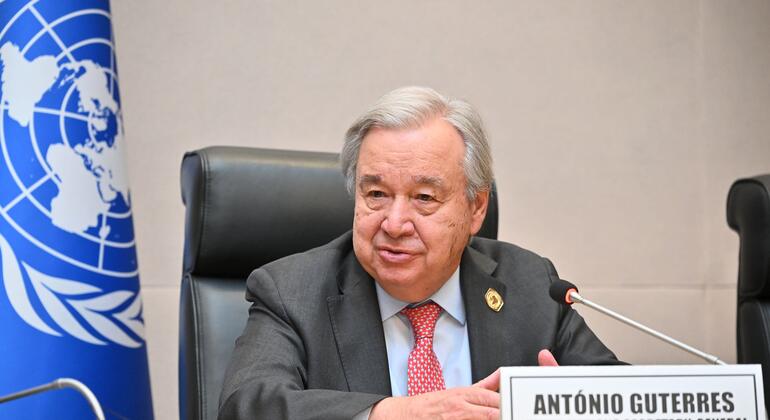

Guterres Urges Reform at AU Summit: “This is 2026 – Not 1946”
Introduction
In a poignant address to the African Union (AU) Summit, UN Secretary-General António Guterres emphasized the urgent need for reform in global governance, stating, “This is 2026 – not 1946.” His remarks resonate with the pressing challenges that the world faces today, underscoring the importance of adapting to the contemporary global landscape.
The Context of Guterres’ Statement
Historical Perspective
In 1946, the aftermath of World War II saw the establishment of various international institutions aimed at fostering peace, security, and cooperation among nations. However, Guterres pointed out that the geopolitical realities in 2026 are vastly different. He draws a comparison between the historical context of the mid-20th century and today’s complex challenges, including climate change, pandemics, and geopolitical conflicts.
The Rise of New Powers
The world today is marked by the emergence of new economic powers, particularly in Africa and Asia. These regions play a significant role in global affairs, and Guterres argues that the old structures must evolve to reflect these changes. The Global South, which includes many African nations, demands a seat at the decision-making table.
Reforming Global Governance
Why Reform is Necessary
Guterres contends that the current global governance framework is outmoded and inadequate in addressing contemporary issues. The UN was formed with a specific goal in mind, but the world has transformed since then. Today, interconnected problems require collaborative strategies that are inclusive and representative of the global population.
Emphasizing Inclusivity
The Secretary-General’s call for reform emphasizes inclusivity in global governance. He argues for the need to enhance the role of regional organizations like the African Union. By empowering such institutions, the international community can ensure that diverse perspectives contribute to decision-making processes.
Climate Change: A Central Focus
The Urgency of Action
One of the most pressing challenges facing the world today is climate change. Guterres highlighted that the impacts of climate change disproportionately affect African nations, which contribute the least to greenhouse gas emissions. He urged the global community to prioritize climate action and provided specific recommendations for urgent reforms in this area.
Financing Climate Initiatives
To combat climate change effectively, Guterres called for increased financial support for developing nations. He stressed that wealthy nations must fulfill their commitments to provide climate financing, ensuring that the Global South can invest in sustainable solutions.
Health Challenges in a Post-Pandemic World
Lessons from COVID-19
The COVID-19 pandemic underscored the need for a more robust global health framework. Guterres remarked that the shortcomings exposed by the pandemic should serve as a wake-up call. He advocated for reforms that would enhance global health infrastructure and encourage collaboration among nations to prepare for future health crises.
Strengthening Health Systems
In his address, Guterres emphasized the importance of strengthening health systems in developing countries. By investing in health infrastructure, training medical personnel, and ensuring access to health technology, countries can better combat pandemics and improve health outcomes.
Geopolitical Tensions and Conflict Resolution
The Need for Diplomacy
In a world fraught with geopolitical tensions, Guterres called for a renewed commitment to diplomacy. Instead of resorting to military solutions, he encouraged global leaders to engage in dialogue and collaborative problem-solving.
Conflict Prevention Strategies
Guterres highlighted that conflict prevention must be a top priority. By addressing the root causes of conflict—such as poverty, inequality, and lack of opportunities—nations can work toward sustainable peace.
The Role of Youth in Reform
Empowering the Next Generation
Guterres stressed the crucial role that young people play in shaping the future. He encouraged the AU to focus on youth empowerment, ensuring that the voices of the next generation are heard in discussions about global governance.
Promoting Education and Innovation
Investment in education and innovation can bear fruit in terms of sustainable development. Guterres called for initiatives that empower young people, equipping them with the skills and knowledge needed to tackle global challenges.
Conclusion: A Call to Action
Guterres’ message at the AU Summit is a clarion call for reform in global governance. As we navigate the complexities of 2026, it is imperative that global leaders take action to adapt to the changing landscape. From climate change to health crises and geopolitical tensions, the time for inclusive and collaborative solutions is now. Embracing reform will not only create a more equitable global framework but will also ensure that every nation has a voice in shaping a better future for all.
SEO Optimization Strategies
- Keywords to Include: António Guterres, AU Summit, global governance reform, climate change, international relations, youth empowerment, health challenges.
- Meta Description: Discover António Guterres’ urgent call for reform at the AU Summit, highlighting the necessity for adaptable global governance in a rapidly changing world.
- Internal Linking: Link this article to previous writings on climate change initiatives, global health strategies, and youth empowerment in international relations.
- External Links: Include credible references and statistics from recognized global institutions to enhance the article’s authority.
By adhering to these strategies, this piece can effectively engage readers while being optimized for search engine visibility.
For more details and the full reference, visit the source link below:
Read the complete article here: https://news.un.org/feed/view/en/story/2026/02/1166965