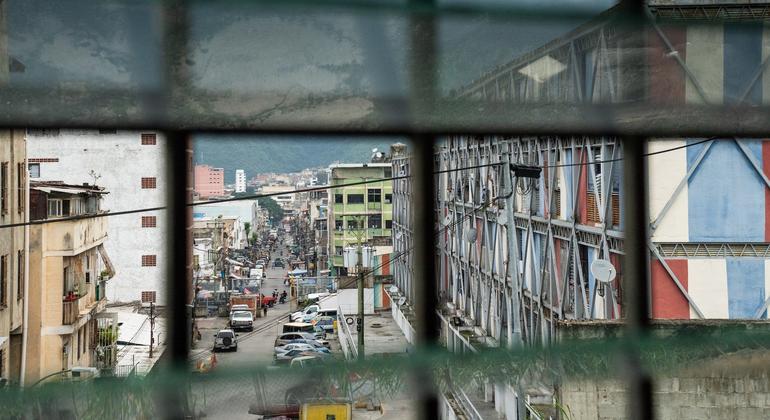

Venezuela’s Repressive State Apparatus: Intact Despite Leadership Change
Venezuela, a nation once revered for its vast oil reserves and beautiful landscapes, has recently become synonymous with political turmoil, humanitarian crises, and social unrest. A crucial aspect of this crisis is the nation’s repressive state apparatus, which remains intact despite shifts in leadership. In this article, we will explore the mechanisms of oppression in Venezuela, the implications of leadership changes, and the persistent nature of the repressive state apparatus.
Introduction to Venezuela’s Political Climate
Venezuela has seen a series of leadership changes, particularly following the death of President Hugo Chávez in 2013. His successor, Nicolás Maduro, has faced mounting criticism and widespread protests. Despite these shifts, the core state apparatus designed to maintain control over the populace has not only survived but has adapted to new challenges. This adaptability raises questions about the future of freedom and democracy within the country.
The Structure of the Repressive State Apparatus
Military and Paramilitary Forces
At the heart of Venezuela’s repressive state apparatus is a powerful military that has historically aligned itself with the ruling party. The Bolivarian National Armed Forces (FANB) not only protect the regime but also serve as a tool for suppression, quelling protests and dissent. In recent years, paramilitary groups, often referred to as “colectivos,” have also played a significant role in intimidating opposition groups and citizens alike.
Intelligence Services
Venezuela’s intelligence agency, the Bolivarian National Intelligence Service (SEBIN), operates as a key player in the repression of dissent. SEBIN is tasked with surveilling, infiltrating, and detaining those deemed a threat to national security. Critics argue that the agency has employed tactics of torture and extrajudicial killings to silence opposition voices.
Judicial System as a Tool for Repression
The judicial system in Venezuela is not independent; instead, it is manipulated to serve the interests of the ruling party. Prosecutors and judges often function as instruments of state repression, targeting political opponents and activists while ignoring abuses committed by government officials. The use of the judiciary to stifle dissent is a clear violation of human rights, yet it remains a cornerstone of the regime’s control.
Leadership Changes: A Facade of Change
The Chávez to Maduro Transition
The transition from Hugo Chávez to Nicolás Maduro created the illusion of a potential political shift. While Chávez was a charismatic leader who rallied support among the masses, Maduro’s leadership has been marked by increasing authoritarianism. Despite their differences, both leaders have relied on the same mechanisms of repression to maintain power, highlighting the continuity of state violence in Venezuela.
Opposition Dynamics
The opposition in Venezuela, though fragmented, has attempted to voice dissent in various forms—from protests to political parties. However, the leadership changes have often been met with brutal crackdowns, effectively stifling any significant challenge to the regime. Despite international condemnation, the state apparatus remains firmly in place, demonstrating its resilience against the political turbulence.
The Role of International Actors
Sanctions and Diplomatic Pressure
International sanctions imposed by countries such as the United States have aimed to generate pressure on Venezuela’s leadership to respect human rights. However, these measures have not significantly impacted the repressive state apparatus. Instead, they are often used by the Maduro regime to galvanize nationalist sentiments among the populace, portraying the external pressures as attacks on sovereignty.
Human Rights Violations and International Response
Several international organizations, including the United Nations, have documented human rights violations in Venezuela. The regime’s capacity for violence remains robust, with evidence of extrajudicial killings, arbitrary detentions, and torture. While international responses have raised awareness, they have, so far, failed to dismantle the deeply entrenched repressive structures.
The Impact of Economic Crisis
Linking Economic Despair to Repression
Venezuela’s economic situation has spiraled into one of the worst crises in modern history, characterized by hyperinflation, widespread poverty, and food shortages. This desperation has further entrenched the repressive state apparatus, as the government uses fear and control to distract from its failures. Economic despair leads to increased dissent, which the regime promptly suppresses through its established instruments of repression.
Control Over Resources
The government’s control over Venezuela’s vast oil resources further solidifies its power. By manipulating the economy, the regime can maintain loyal supporters within the military and security forces, ensuring that the apparatus remains in place. The intertwining of economic control and state repression exemplifies the systematic nature of the regime’s tactics.
Resistance and the Future
Voices of Dissent
Despite the seemingly impenetrable nature of Venezuela’s repressive state apparatus, acts of resistance and expressions of dissent continue to emerge. Brave activists and opposition leaders risk their lives to speak out against the abuses of power. Social media platforms and independent journalism have become crucial in documenting the truth, despite governmental censorship.
Potential for Change
While the repressive state apparatus may be intact at present, the potential for meaningful change lies within the resilience of the Venezuelan people. As civil society begins to reassert itself, the regime may eventually face increasing pressure to adopt reforms. The question remains whether this will be achieved through peaceful means or whether further conflict is inevitable.
Conclusion
Venezuela’s repressive state apparatus remains intact despite changes in leadership, illustrating the deeply rooted nature of authoritarianism in the country. The military, intelligence services, and judicial systems work in concert to suppress dissent and maintain control. As the nation grapples with a dire economic crisis and increasing international scrutiny, the potential for change hinges on the resilience and courage of its citizens. Ultimately, it is their fight for democracy and human rights that may determine the future course of Venezuela.
This article highlights the need for continued international attention and intervention in Venezuela’s ongoing crisis, as the repressive apparatus evolves yet remains unchanged. The fight for freedom in Venezuela is far from over; it is an ongoing struggle that embodies the spirit of its people, who continue to resist in the face of overwhelming odds.
For more details and the full reference, visit the source link below:
Read the complete article here: https://news.un.org/feed/view/en/story/2026/03/1167126

