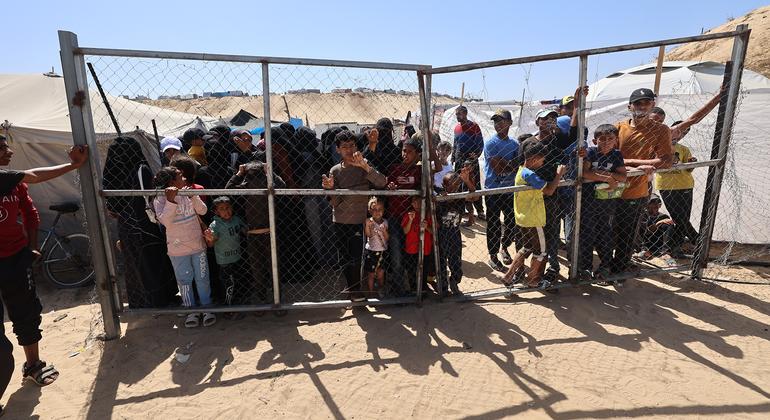

SECURITY COUNCIL LIVE: Gaza in Focus
Introduction
The ongoing situation in Gaza has once again taken center stage in international discussions, especially in the chambers of the United Nations Security Council (UNSC). As nations around the world grapple with the humanitarian implications and political ramifications of the conflict, the UNSC remains a pivotal platform for dialogue and decision-making. This article dives deep into the latest developments concerning Gaza in the context of the Security Council’s engagements, exploring the complexities and narratives that define the current landscape.
The Role of the UN Security Council
Historical Context
The United Nations Security Council was established in 1945 to maintain international peace and security, dealing with conflicts and crises as they arise. Its role has evolved over the decades, often molding global diplomatic strategies. Decisions made here can lead to sanctions, peacekeeping missions, or calls for ceasefires, making it a crucial arena for issues like the Gaza conflict.
Composition and Functionality
The UNSC comprises 15 members, including five permanent members with veto power: the United States, the United Kingdom, France, Russia, and China. The remaining ten are elected for two-year terms. This structure often leads to complex negotiations and varying degrees of consensus, especially on contentious issues such as the Israel-Palestine conflict.
Current Developments in Gaza
Escalation of Violence
Recent developments in Gaza have led to significant escalations in violence, marked by airstrikes, ground operations, and rocket fire. The humanitarian impact has been catastrophic, with thousands of casualties reported, exacerbating an already dire situation. The UNSC’s discussions aim to address these urgent humanitarian needs while seeking pathways to de-escalation.
Humanitarian Crisis
The humanitarian situation in Gaza is appalling, with many civilians lacking basic necessities like food, clean water, and medical supplies. The UNSC has addressed this crisis, emphasizing the need for humanitarian aid and the protection of civilians. Each session focused on Gaza raises pressing questions: How can the international community effectively provide aid? What measures can be taken to ensure safe passage for relief efforts?
Member States’ Perspectives
Divergent Views and Political Interests
Member states of the UNSC have differing views on the Gaza conflict, often influenced by geopolitical interests. The U.S. typically supports Israel’s right to self-defense, while other members emphasize the plight of Palestinian civilians. These divergent perspectives complicate efforts for a unified response.
Recent Resolutions and Vetoes
In light of the escalating conflict, various resolutions regarding Gaza have been proposed. However, the use of veto power by permanent members often stymies progress. Recent discussions highlight the challenges in reaching consensus, underscoring the political maneuvers at play within the UNSC.
International Reactions
Global Diplomatic Engagement
The international community continues to react to the Gaza situation with varying degrees of urgency. While some nations advocate for immediate ceasefires and negotiations, others exchange criticism and blame. The UNSC serves as a focal point for these discussions, amplifying messages of both concern and condemnation.
Non-Governmental Organizations and Activism
NGOs and civil society organizations play a crucial role in raising awareness about the Gaza conflict. Their advocacy efforts often influence diplomatic agendas and public opinion. By engaging with media and organizing demonstrations, these groups keep the plight of Gaza in the global spotlight.
The Path Forward: Challenges and Opportunities
Need for Effective Mediation
With the complexities surrounding the Gaza conflict, effective mediation is crucial. The UNSC must balance the demands for humanitarian access, ceasefires, and long-term political solutions. Engaging regional players, alongside traditional powers, could enhance diplomatic efforts and yield positive outcomes.
Future Sessions of the UNSC
Upcoming sessions of the UNSC will likely continue to see Gaza as a focal point. As situations evolve, the need for adaptive strategies becomes more pronounced. The international community must remain vigilant and responsive to the dynamic landscape of the conflict.
Conclusion
The Security Council’s engagement with the Gaza crisis underscores the challenges of navigating international relations in times of conflict. As the humanitarian situation continues to deteriorate, the need for prompt and effective action becomes more critical. The dialogues within the UNSC serve as a reflection of the global community’s collective will to seek peace, stability, and justice for all affected by the situation in Gaza.
Final Thoughts
The situation in Gaza illustrates the complexities of geopolitics, humanitarian needs, and moral imperatives in responding to conflict. The UNSC remains a platform for navigating these challenges, but achieving meaningful progress requires cooperation and compromise among all stakeholders involved. As we continue to monitor developments, it is imperative to advocate for humanitarian solutions that prioritize the safety and dignity of civilians caught in the crossfire.
By focusing on these aspects, this article aims to inform and engage readers while enhancing its visibility in search engines. The effective use of headings and keywords, along with a structured approach, ensures that the content is both reader-friendly and optimized for searchability.
For more details and the full reference, visit the source link below:
Read the complete article here: https://news.un.org/feed/view/en/story/2026/04/1167392

