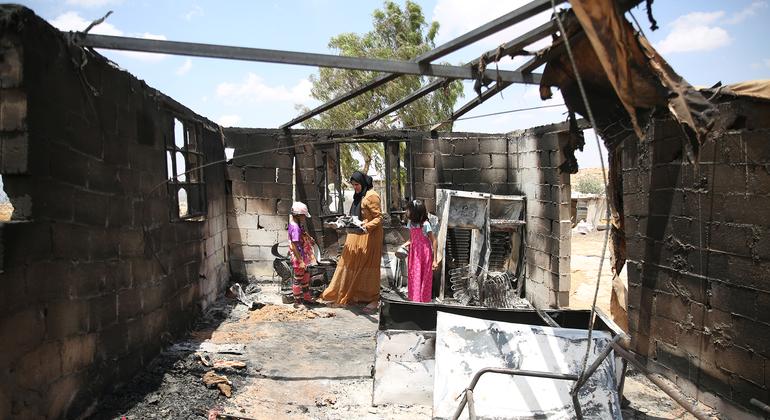

Renewed Calls for Two-State Solution Amid ‘Perilously Fragile’ Conditions for Palestinians
The Israeli-Palestinian conflict has been at the forefront of international discourse for decades. As tensions continue amid increasingly volatile conditions, renewed calls for a two-state solution have emerged. This article explores the necessity of this solution, the current situation faced by Palestinians, and the prospects for peace in the region.
Understanding the Two-State Solution
The two-state solution envisions the establishment of an independent Palestinian state alongside the state of Israel. This approach aims to provide a framework for resolving the ongoing conflict, ensuring both parties have their rights acknowledged, fostering coexistence, and maintaining peace in the region.
Historical Context
The roots of the Israeli-Palestinian conflict trace back to the early 20th century. The end of the British mandate in Palestine and the subsequent creation of Israel in 1948 led to persistent disputes over territory, rights, and recognition. Various attempts at peace, such as the Oslo Accords in the 1990s, have failed to yield lasting solutions, contributing to the current instability.
Current Conditions for Palestinians
Socioeconomic Challenges
Palestinians live under conditions that can be described as “perilously fragile.” According to various reports from humanitarian organizations, they face significant challenges that hinder quality of life:
-
Economic Hardships: The Palestinian territories suffer from high unemployment rates, limited access to resources, and economic blockade. The World Bank reported that poverty rates in Gaza can reach up to 60%, necessitating humanitarian assistance.
-
Restricted Movement: Restrictions on movement due to check-points and barriers severely limit access to education, healthcare, and employment opportunities. This results in a deterioration of living conditions and increased reliance on aid.
-
Violence and Instability: Frequent clashes and escalations of violence have resulted in loss of life, destruction of infrastructure, and a climate of fear pervading daily life for Palestinian families.
Human Rights Concerns
Human rights organizations have raised alarms over the treatment of Palestinians. With ongoing settlements and military operations, violations of basic rights continue to be documented. According to the United Nations, the conditions in Gaza are described as inhumane, raising international concern about the urgent need for intervention.
The Role of International Community
Increased Advocacy for a Two-State Solution
With conditions deteriorating, the international community’s focus has shifted back to the two-state solution. Key players, including the United Nations, the European Union, and the United States, are increasingly vocal about the necessity of this framework to restore peace.
-
Diplomatic Pressure: International leaders have begun to emphasize the urgency of negotiations to establish a viable Palestinian state. The recent calls for renewed dialogue mirror a collective acknowledgment of the urgency of the matter.
-
Support for Humanitarian Aid: Alongside diplomatic efforts, international organizations are ramping up assistance to alleviate immediate humanitarian needs in Palestinian territories. This dual approach aims to address both the socio-economic challenges and the broader political aspirations of Palestinian self-determination.
Obstacles to Achieving Peace
While the desire for a two-state solution is palpable, numerous obstacles remain. These challenges complicate the possibility of establishing a peaceful coexistence between Israelis and Palestinians.
Political Divisions
-
Internal Palestinian Politics: Political fragmentation within Palestinian leadership, notably between Hamas and Fatah, hampers a unified approach to negotiations. Without a consistent leadership representing Palestinian interests, advancing talks becomes increasingly complex.
-
Israeli Government Stance: The Israeli government’s political landscape, including the rise of right-wing factions that oppose territorial concessions, presents significant hurdles to a negotiated settlement.
Settlement Expansion
The continued growth of Israeli settlements in the West Bank complicates the feasibility of a two-state solution. Many see these activities as undermining the potential for a contiguous Palestinian state and contributing to tensions between communities.
Prospects for the Future
Renewed Diplomatic Efforts
Diplomatic engagement must adapt to the realities on the ground. A multi-faceted approach that includes grassroots involvement and international mediation is essential.
-
Community Engagement: Encouraging dialogue at the grassroots level can help build mutual understanding and trust between Israelis and Palestinians, paving the way for broader political solutions.
-
Third-Party Mediation: The involvement of neutral international bodies to mediate discussions can foster a more balanced negotiation process that addresses the needs and rights of both parties.
Leveraging Technology for Peace
Emerging technologies can play a significant role in fostering communication and collaboration between conflicting groups. Digital platforms can help bridge gaps, promote dialogue, and create collaborative projects that benefit both sides.
Conclusion: The Need for Urgent Action
The situation in the Palestinian territories is undeniably grave. As renewed calls for a two-state solution gain traction, the urgency for effective action cannot be overstated. The international community must prioritize diplomatic resolutions, humanitarian assistance, and investment in community dialogues to create lasting solutions.
Only by acknowledging the complex realities and emphasizing mutual respect and recognition can a sustainable and just resolution emerge from the shadows of conflict. The hope for peace lies within the commitment of all stakeholders to work together towards a brighter future for both Israelis and Palestinians.
For more details and the full reference, visit the source link below:
Read the complete article here: https://news.un.org/feed/view/en/story/2026/02/1166879