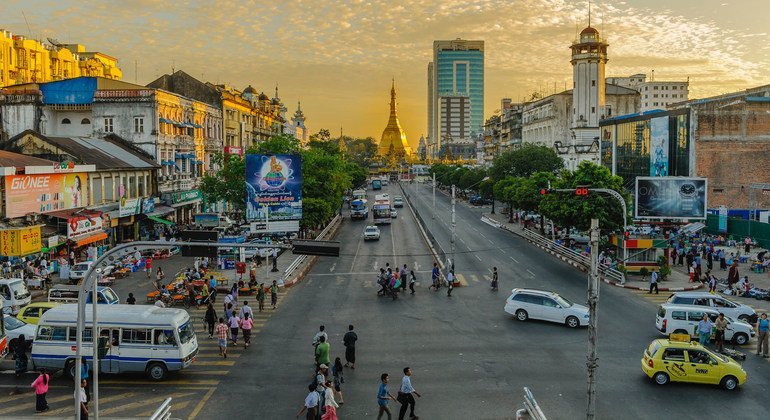

Myanmar Crisis Deepens Five Years After Coup: Military Ballot Entrenches Repression
The Myanmar crisis has reached a critical juncture, five years after the military coup on February 1, 2021. This seismic event disrupted a fragile democracy that had shown potential for development, civil liberties, and human rights. As the military government, known as the State Administration Council (SAC), continues to consolidate power through a series of controversial elections and repressive measures, the humanitarian situation worsens. This article examines the ramifications of the military ballot, the dire human rights situation, and the international community’s response.
Historical Context: The Road to the Coup
Myanmar, also known as Burma, has a fraught political history characterized by military rule and sporadic attempts at democratization. After decades of authoritarian governance, the National League for Democracy (NLD), led by Aung San Suu Kyi, won a landslide victory in the 2015 elections. This victory triggered hopes for a new democratic era. However, military leaders were dissatisfied with the election results and effectively took control once again in February 2021, citing electoral fraud that was widely debunked.
The Military Ballot: A Tool of Repression
In the aftermath of the coup, the SAC’s approach has focused on entrenching power through various tactics, including a controversial military ballot intended to legitimize their rule. In holding elections in 2023, the military aims to create a facade of democratic legitimacy in a country already beset by turmoil. Observers have criticized these elections as fundamentally flawed, given the absence of a free press, limited political participation, and systemic human rights abuses.
Election Legitimacy Concerns
The military’s recent elections were neither transparent nor inclusive. The NLD and other political acoounts were barred from participating, and reports of voter intimidation and disenfranchisement were rampant. Consequently, the elections failed to meet basic democratic standards. Instead of bringing stability, they have solidified the military’s grip on power while exacerbating inter-communal tensions and resistance movements.
Impact on Human Rights
The ramifications of the Myanmar crisis extend far beyond the political sphere. Human rights abuses have escalated, with the military committing widespread atrocities against civilians. This includes arbitrary detentions, extrajudicial killings, sexual violence, and forced displacement. According to human rights organizations, more than 1.5 million people have been uprooted since the coup.
The Rohingya Crisis
The situation for the Rohingya people remains particularly dire. This ethnic minority, predominantly Muslim, has faced systemic violence and persecution at the hands of the military and extremist nationalist groups. Despite global condemnation, the military has continued its campaign against the Rohingya, leading to an estimated 1 million people living in refugee camps in Bangladesh and beyond. The international community’s failure to hold the military accountable for these crimes has perpetuated a cycle of violence and impunity.
Civil Disobedience and Resistance Movements
Despite the overwhelming power of the military, grassroots civil disobedience movements have emerged across Myanmar. Activists and ordinary citizens have taken significant risks to resist the regime. From protests to labor strikes, these acts of defiance reflect a broad-based commitment to restoring democracy. The People’s Defense Force (PDF) has also gained traction as an armed resistance formation, challenging military forces directly.
International Solidarity
Internationally, various groups and organizations are expressing solidarity with Myanmar’s people. The ongoing crisis has spurred advocacy networks and NGOs to push for sanctions against military leaders while providing humanitarian aid to affected communities. However, diplomatic efforts have often been hampered by the geopolitical interests of regional powers like China and Russia, which have maintained relationships with the military junta.
The Role of Civil Society and Media
An indispensable pillar in the fight for democracy is civil society and independent media. However, both are under constant threat from the regime. Journalists face severe reprisals for reporting the truth, while civil society organizations have been targeted for shutdowns and arrests. Digital censorship is rampant, and many activists resort to underground networks to communicate effectively.
The Importance of International Support
Activists emphasize the need for continued international pressure on the military government. Targeted sanctions against military leaders and their businesses are essential steps toward holding them accountable for human rights abuses. Additionally, providing pathways for safe migration for those threatened by the regime can help curb the humanitarian crisis and represent a genuine commitment to human rights.
Potential Solutions and the Path Forward
The complexity of the Myanmar crisis necessitates a multifaceted approach to resolution. Dialogue among stakeholders, including the military, ethnic groups, and civil society, could yield meaningful avenues for reform. Moreover, comprehensive humanitarian assistance is critical to address immediate needs while building resilience within communities.
Re-engagement with ASEAN
The Association of Southeast Asian Nations (ASEAN) has grappled with how to address Myanmar’s situation effectively. Some member states advocate for robust action, while others prefer a non-interventionist approach. A unified ASEAN strategy that includes holding the regime accountable while promoting a return to democracy is essential for long-term stability in the region.
Conclusion: The Urgency for Action
Five years after the military coup, Myanmar stands at a crossroads. The deepening crisis reflects the dangers of unchecked power and the urgent need for international solidarity with the people of Myanmar. The military’s attempts to entrench its repressive rule through elections only serve to highlight the need for ongoing activism and support from the global community. Now is the time to advocate for meaningful solutions that prioritize human rights, democracy, and genuine reconciliation for the future of Myanmar. Without concerted efforts, Myanmar risks slipping deeper into chaos, leaving a generation to pay the price.
As this situation unfolds, it will be crucial to remain informed and engaged, amplifying the voices of the Myanmar people struggling against repression. A stable future depends not solely on the actions of leaders but on a collective commitment to supporting justice, equity, and freedom for all.
For more details and the full reference, visit the source link below:
Read the complete article here: https://news.un.org/feed/view/en/story/2026/01/1166866