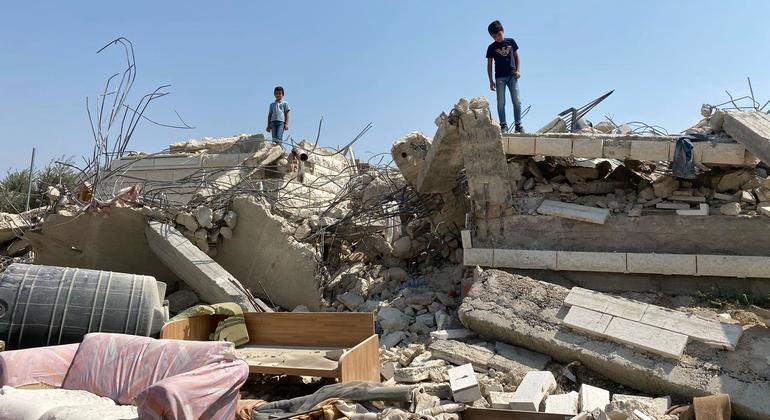

Guterres Deplores Israel’s Move to Resume Land Registration in the West Bank
Introduction
United Nations Secretary-General António Guterres has expressed deep concerns regarding Israel’s decision to resume land registration in the West Bank. This action has significant implications for the ongoing Israeli-Palestinian conflict, exacerbating tensions and undermining peace prospects in the region. In this article, we will explore the implications of this move, reactions from various stakeholders, and historical context to better understand the significance of Guterres’ statement.
Context of the Land Registration Decision
On October 2023, Israel announced its decision to resume land registration in the West Bank. This step is viewed as a continuation of policies that have long been criticized by the international community. Critics claim that land registration under Israeli law serves to further entrench Israeli settlements and diminish Palestinian claims to the land.
Historical Background
The Israeli-Palestinian conflict dates back several decades, characterized by mutual claims to land and sovereignty. After the Six-Day War in 1967, Israel occupied the West Bank, leading to a complex and contentious situation regarding land ownership. The issue of land registration is critical, as it affects property rights, residency status, and the foundational aspects of sovereignty for both Israelis and Palestinians.
Guterres’ Statement: Key Points
Secretary-General Guterres has made it clear that he views the resumption of land registration as a significant setback to peace efforts. His statement highlights several key concerns:
1. Violation of International Law
Guterres emphasized that such actions contradict international law and United Nations resolutions. The acquisition of territory by force is prohibited under various international treaties, including the Fourth Geneva Convention. Guterres’ strong denunciation underlines the necessity for all nations to abide by international norms.
2. Threat to Peace Negotiations
The resumption of land registration is seen as a unilateral move that jeopardizes ongoing peace negotiations. Guterres remarked that actions taken by one side can undermine trust and make it more challenging to reach a peaceful resolution.
3. Impact on Palestinian Rights
The secretary-general reiterated the importance of considering Palestinian rights in any discussions related to land and sovereignty. He stated that the resumption of land registration could exacerbate existing inequalities and displace Palestinian families.
Reactions from Stakeholders
Guterres’ statement was met with a range of responses from various stakeholders in the region and beyond.
Israeli Government Response
The Israeli government defended its decision as necessary for maintaining control and security in the West Bank. Officials argue that land registration is a functional aspect of governance. They assert that it does not undermine Palestinian claims but instead aims to provide order to the region.
Palestinian Authority Reaction
The Palestinian Authority (PA) strongly condemned the Israeli move, affirming that it only heightens the risks of conflict. The PA called for international intervention, urging global powers to take a stronger stance against Israel’s actions in line with Guterres’ statements.
International Community’s Perspective
The international community’s response has been largely supportive of Guterres. Various countries, especially those within the European Union, have expressed alarm over Israel’s land registration decisions. Calls for accountability and adherence to international law have gained momentum.
The Broader Implications for the Israeli-Palestinian Conflict
The resumption of land registration is not merely a bureaucratic action; it is emblematic of larger tensions in the Israeli-Palestinian conflict. The following factors must be considered:
Erosion of Trust
Trust between Israelis and Palestinians is a fragile and complex issue. Unilateral actions such as land registration deepen divides, making negotiations increasingly difficult. Each side views such actions as provocations, and this division can lead to further violence.
Settlement Expansion
Land registration is intricately linked to the expansion of Israeli settlements in the West Bank. The growth of settlements is a contentious issue, viewed as illegal under international norms. Continued settlement expansion diminishes the land’s availability for future Palestinian states.
Escalation of Violence
Historically, unilateral decisions have often led to escalations in violence, whether through protests, military responses, or other forms of conflict. Guterres’ concerns about potential violence should not be underestimated, given the highly charged environment in which these actions are occurring.
Conclusion
António Guterres’ condemnation of Israel’s decision to resume land registration in the West Bank underscores the ongoing complexities of the Israeli-Palestinian conflict. While it may seem like a technical bureaucratic move, the broader implications extend far beyond administrative measures; they touch upon issues of sovereignty, international law, and human rights.
Importance of Diplomatic Efforts
To advance peace efforts, it is crucial that both sides engage in meaningful dialogue grounded in mutual respect and understanding. The international community, including the United Nations, must play an active role in facilitating discussions to ensure that both Israeli and Palestinian rights are upheld.
Call for Accountability
As Guterres pointed out, adherence to international law is essential for the future stability of the region. Countries worldwide must hold all parties accountable while pursuing a just and sustainable peace in the region.
By recognizing the complexities of land registration and its far-reaching consequences, there lies an opportunity to bridge divides and foster peace instead of conflict. Through dialogue, understanding, and co-operation, a hopeful path forward may be laid down for both Israelis and Palestinians.
For more details and the full reference, visit the source link below:
Read the complete article here: https://news.un.org/feed/view/en/story/2026/02/1166973