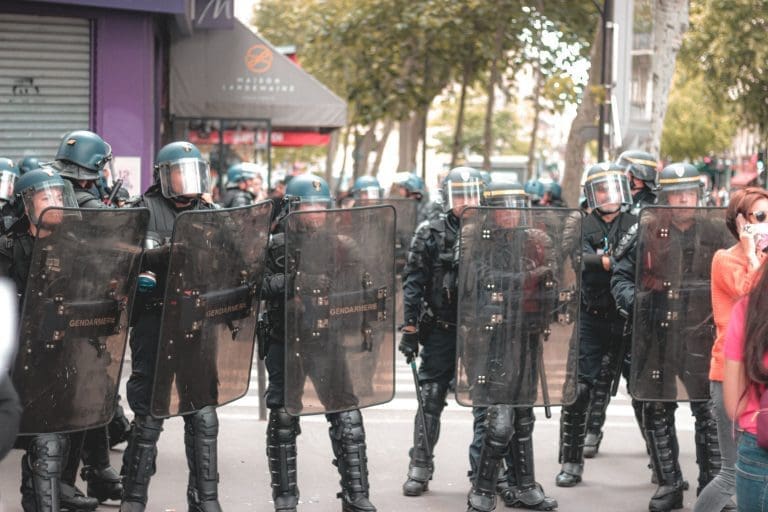

PARIS, France – October 7, 2026 (STL.News) France temporarily suspended the use of police stun grenades during high school demonstrations Wednesday after a 15-year-old boy lost a hand during a confrontation with riot police, as nationwide protests over deteriorating school conditions continued to disrupt education across the country.
The decision came amid a wave of student-led demonstrations that have lasted more than two weeks, resulting in thousands of arrests, widespread school disruptions and increasingly contentious confrontations between protesters and police.
Students are demanding improvements to public education, including repairs to aging school buildings, additional teachers and better classroom conditions.
The demonstrations have expanded beyond individual schools, attracting support from university students, teachers and labor organizations.
Interior Minister Laurent Nuñez announced the temporary weapons suspension while authorities investigate the teenager’s injury, which occurred Monday, October 5, in Lens, northern France.
Prime Minister Sébastien Lecornu has also promised to review students’ demands and present education proposals by the end of October.
The unrest has become a significant challenge for President Emmanuel Macron’s government as France approaches its 2027 presidential election.
Students Demand Better School Conditions
The demonstrations began in September in the Paris region before spreading to other parts of France.
Students have complained about overcrowded classrooms, teacher shortages, deteriorating buildings and inequalities in educational opportunities.
Some protesters say years of insufficient investment have left public schools struggling to provide adequate facilities and consistent instruction.
The movement has included class boycotts, school blockades and organized marches.
On Tuesday, October 6, approximately 266,000 people demonstrated nationwide, including 56,000 in Paris, according to French government estimates reported by The Associated Press.
The protests involved students and supporters from numerous communities, transforming local complaints about school conditions into a national political issue.
Many demonstrations remained peaceful, but others involved burning barricades, property damage and confrontations with riot police.
Police used tear gas during some incidents, while demonstrators were accused of throwing objects at officers.
The Associated Press reported that nearly 500 people were detained during Tuesday’s demonstrations alone.
The agency also reported more than 6,500 arrests since the movement began, many involving minors.
Those arrests illustrate the scale of the unrest but do not establish criminal guilt.
Government officials maintain that police must respond to violence and protect public safety, while student representatives and rights organizations have questioned the tactics used during some confrontations.
Teenager’s Injury Prompts Police Weapons Suspension
One of the most serious incidents occurred on October 5 in Lens.
A 15-year-old boy lost a hand during a demonstration involving riot police.
Local prefect François-Xavier Lauch confirmed the injury, and authorities opened an investigation.
The regional newspaper La Voix du Nord reported that the teenager had picked up a police stun grenade before the explosion. Reuters attributed that account to the newspaper in a corrected report; the precise circumstances remain under investigation.
Interior Minister Nuñez subsequently said there was a strong possibility that a police stun grenade caused the injury.
On Wednesday, he announced that the weapons would temporarily be withdrawn from use during the high school protest movement until investigators determined what happened.
The suspension is limited to policing those demonstrations. It does not represent a permanent nationwide ban on stun grenades or other crowd-control equipment.
The injury has intensified scrutiny of police tactics, particularly during demonstrations involving teenagers.
Rights organizations, students and some political opponents have accused police of using disproportionate force.
Government officials have defended the overall police response, citing violent confrontations and attacks on officers.
Nuñez also reported that 18 incidents had been referred to France’s police inspectorate for investigation.
Those referrals do not establish misconduct. They indicate that specific incidents require formal examination.
The findings could influence future decisions about crowd-control tactics and police accountability.
Hundreds of Schools Disrupted Across France
The demonstrations have caused widespread interruptions to classroom instruction.
According to France’s Education Ministry, classes were fully or partially suspended at 891 schools Tuesday, October 6, as reported by The Associated Press.
Reuters separately reported that more than 500 schools were closed Wednesday as demonstrations continued.
The figures refer to different dates and reporting measures. A partial suspension of classes does not necessarily mean an entire school was closed.
Some disruptions resulted from blockades and safety concerns, while others involved serious damage to school buildings.
Education Minister Édouard Geffray said 24 high schools sustained substantial damage from fires or vandalism.
According to Reuters, the damage affected approximately 30,000 students, with estimated repairs costing between 20 million and 30 million euros.
The destruction has complicated efforts to restore normal instruction.
Students protesting inadequate educational facilities now face additional disruption because some schools require repairs.
However, the damage cannot be attributed collectively to everyone participating in the demonstrations. Authorities must establish responsibility for specific criminal acts individually.
The closures have also increased pressure on school administrators, parents and government officials to find ways to resume instruction safely.
Government Promises Education Proposals
Prime Minister Lecornu has acknowledged the students’ concerns and promised government proposals by the end of October.
The issues under consideration include school renovations, teacher availability, and other educational improvements.
However, the government has not announced a comprehensive package of immediate reforms.
France’s financial pressures could complicate efforts to increase education spending.
Repairing buildings, recruiting additional teachers and improving classroom conditions all require public resources.
The government must balance those demands against other spending commitments.
Student representatives have continued calling for action, and additional demonstrations were planned for Thursday, October 8.
The promised proposals have therefore not resolved the dispute.
Whether they will satisfy students and educators remains uncertain.
Protests Increase Political Pressure
The demonstrations come as France approaches its 2027 presidential election.
President Macron cannot seek a third consecutive term under the French Constitution, and the protests have intensified political disagreements over education funding, public services and police accountability.
The movement has also attracted support beyond students, reflecting broader concerns about the condition of public institutions.
Although violent confrontations have occurred, the unrest should not be confused with civil war.
The available reporting does not establish that organized armed factions are fighting for control of French territory.
The events are more accurately described as nationwide student-led demonstrations accompanied by serious public-order disturbances.
France’s government now faces several immediate challenges: restoring classroom instruction, investigating injuries and allegations of misconduct, repairing damaged schools and presenting credible education proposals.
The central question is whether the government’s response can address students’ grievances and reduce tensions before further confrontations occur.
The outcome remains uncertain as demonstrations continue and officials work toward their promised education proposals.
Read World News at STL.News

