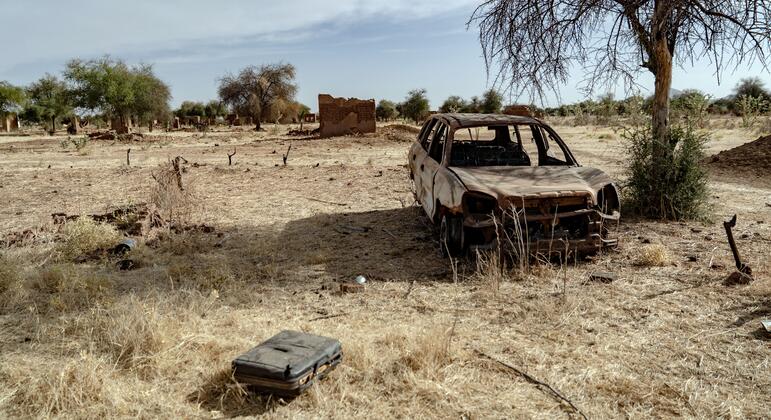

Armed Drones Leading Cause of Civilian Death in Sudan War: UN Rights Chief
Introduction
Armed drones have become a focal point in modern warfare, especially in conflict zones experiencing humanitarian crises, such as Sudan. According to the United Nations Human Rights Chief, the widespread deployment of armed drones has emerged as a leading cause of civilian deaths in the ongoing Sudanese war. This alarming trend not only exacerbates the humanitarian crisis but also raises critical ethical and legal questions about the use of drone warfare. In this article, we will explore the ramifications of drone strikes in Sudan, the impact on civilians, and the broader implications for international law and human rights.
The Current Situation in Sudan
Sudan has been embroiled in conflict for decades, with various factions vying for control. The recent surge in violence has prompted significant international concern, with armed drones being utilized by both governmental and rebel forces. The UN reports that these unmanned aerial vehicles (UAVs) are increasingly being deployed for surveillance and targeted strikes, contributing to substantial civilian casualties.
Understanding the Role of Armed Drones
What Are Armed Drones?
Armed drones, or UAVs, are unmanned aircraft equipped with weapons systems that can engage targets from the air. They are often used for surveillance, reconnaissance, and targeted military strikes. Their ability to fly for extended periods and deliver precision strikes has made them popular in modern military operations.
The Tactical Advantages of Drones
Drones offer numerous advantages for military forces, including reduced personnel risk and extended reach. In the context of Sudan, armed drones have become a favored tool for both government forces and militias aiming to exert control over disputed territories. However, the line between tactical advantage and the ethical implications of their use is increasingly contentious.
Civilian Casualties in Sudan
The Human Cost of Drone Warfare
The UN Human Rights Chief has reported that civilian deaths caused by drone strikes are alarmingly high. These unfortunate statistics not only reflect the ongoing violence but also illustrate the failure of military operations to distinguish between combatants and non-combatants. Families caught in the crossfire face devastating losses, leading to long-term psychological and social ramifications.
Key Statistics on Civilian Deaths
- According to recent reports, the fatalities from drone strikes in Sudan have increased by over 40% in recent months.
- Civilian casualties accounted for more than 60% of the deaths attributed to armed drones in the conflict.
- Displacement Due To Violence: As drone strikes devastate communities, millions of civilians have been driven from their homes, compounding the humanitarian crisis.
The Ethical Implications
The Changing Nature of Warfare
The reliance on armed drones marks a significant shift in the nature of warfare. The discomforting reality is that these technological advances often prioritize efficiency over human life. As military forces become increasingly reliant on drones, the moral weight of decisions about life and death is often relegated to algorithms and remote operators.
Accountability and Responsibility
One of the most pressing ethical dilemmas surrounding drone warfare is the issue of accountability. Who is held responsible for civilian casualties? The distant nature of drone strikes can create a disconnect, leading to a diminished sense of responsibility among military leaders. This lack of accountability can contribute to human rights violations, as agencies may act without sufficient oversight.
International Law and Human Rights
Legal Framework Surrounding Drone Warfare
International humanitarian law (IHL) stipulates that all military operations must discriminate between combatants and non-combatants. The principle of proportionality also underscores that military action must not cause excessive civilian harm in relation to the anticipated military advantage. Armed drones pose a challenge in adhering to these legal frameworks, especially in densely populated areas like Sudan.
The Role of the United Nations
The United Nations plays a crucial role in advocating for human rights and accountability in conflict zones. Its reports and investigations are essential in bringing attention to the critical issues surrounding drone warfare. The UN urges member states to adhere to international standards and ensure that military operations do not violate human rights.
The Humanitarian Crisis in Sudan
Food Security and Access to Healthcare
The ongoing violence, exacerbated by drone strikes, severely impedes humanitarian efforts in Sudan. With many areas rendered unsafe, access to food, healthcare, and essential services is gravely hindered. Millions find themselves in dire situations, facing hunger and disease, often without the necessary support.
The Psychological Toll
The impact of armed drone strikes extends well beyond physical injuries and fatalities. Survivors often grapple with psychological trauma, leading to long-term mental health challenges. Children, in particular, are vulnerable to the effects of violence and instability, which hinder their development and future prospects.
Moving Forward: Solutions and Recommendations
Enhancing Accountability Mechanisms
To address the issue of civilian casualties, enhancing accountability mechanisms is crucial. International bodies, national governments, and military forces must work collaboratively to ensure that drone warfare adheres to international laws. Independent investigations into civilian deaths can also foster greater transparency and accountability.
Promoting Diplomatic Solutions
The international community must prioritize diplomatic efforts to de-escalate the situation in Sudan. Continuous dialogue between conflicting parties can pave the way for peaceful resolutions, reducing the need for armed conflict and, consequently, drone strikes.
Supporting Humanitarian Initiatives
Investing in humanitarian initiatives is essential in alleviating the suffering of civilians affected by the conflict. Providing food, shelter, and medical assistance can help stabilize communities and mitigate the long-term consequences of violence.
Conclusion
The alarming rise of armed drones as a leading cause of civilian deaths in the Sudanese war speaks volumes about the urgent need for a reevaluation of military strategies and international legal frameworks. As the UN Human Rights Chief emphasizes, it is imperative to find a balance between national security interests and the protection of civilian lives. The solutions lie not only in addressing the immediate humanitarian crisis but also in fundamentally changing the way conflicts are approached, ensuring that technology does not overshadow humanity. The world must focus on diplomacy, accountability, and humanitarian support to forge a path toward lasting peace in Sudan.
For more details and the full reference, visit the source link below:
Read the complete article here: https://news.un.org/feed/view/en/story/2026/05/1167479