
Cyprus: Guterres Calls for Renewed Trust and a New Meeting on the Way Forward
Introduction
Cyprus, an island nation located in the eastern Mediterranean, has been a focal point of geopolitical tensions, particularly due to its division between the Greek Cypriots and Turkish Cypriots. Recently, United Nations Secretary-General António Guterres emphasized the need for renewed trust and convening a new meeting to discuss pathways toward a resolution of the long-standing conflict. This article delves into the nuances of the current situation in Cyprus, the historical context that led to its division, the role of international players, and the potential for peace.
Historical Context: The Division of Cyprus
Cyprus has a rich history influenced by numerous civilizations, including the Greeks, Romans, and Ottomans. In 1960, the island gained independence from British rule, leading to tensions between the Greek and Turkish communities. By 1974, following a Greek-led coup attempt aimed at uniting with Greece, Turkey invaded the northern part of the island, resulting in its division into the Republic of Cyprus in the south and the Turkish Republic of Northern Cyprus (recognized only by Turkey) in the north.
The Role of International Organizations
The United Nations has been actively involved in peacekeeping efforts in Cyprus since the 1960s. The Green Line, established by the UN in 1974, effectively separates the two communities. Over the years, multiple rounds of negotiations have taken place, but none have yielded a definitive solution. Guterres’s call for renewed trust indicates a recognition of the complex dynamics at play and the urgent need for diplomatic engagement.
Guterres’s Call for Renewed Trust
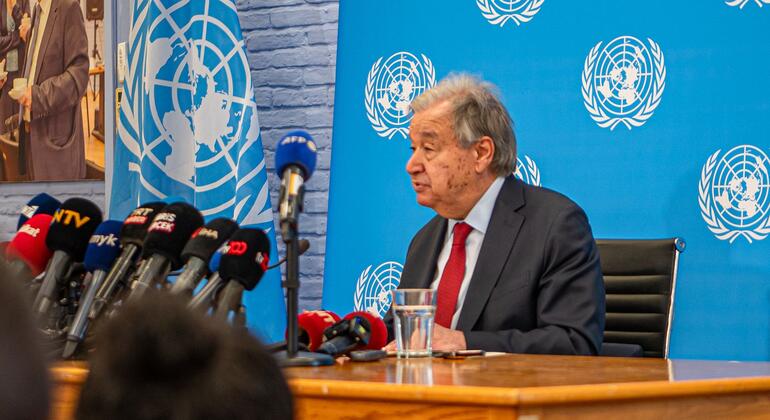
Guterres has pushed for a fresh approach to the Cyprus issue, urging both communities to build trust and goodwill. He stated that constructive dialogue is essential for moving forward. This involves not just political leaders but also engaging civil society, which is pivotal for fostering understanding and reconciliation.
Importance of Trust in Conflict Resolution
Trust is a crucial element in any peace process. In Cyprus, deeply rooted suspicions and grievances have hampered efforts to achieve lasting peace. Guterres’s emphasis on rebuilding trust suggests that a primary focus must be on enhancing intercommunal relationships and addressing historical grievances.
Potential Topics for a New Meeting
The new meeting proposed by Guterres could address several important topics, which are essential for creating a roadmap toward peace:
-
Property Rights and Displacement Issues
- Many individuals and families were displaced during the 1974 conflict. A clear framework addressing property restitution and compensation could serve as a significant confidence-building measure.
-
Security Arrangements
- Security concerns are paramount, especially considering Turkey’s military presence in Northern Cyprus. Discussions should include the future role of foreign troops and guarantees needed for both communities’ security.
-
Power-Sharing Arrangements
- Political power-sharing is essential for mutual representation. Another meeting could focus on proposals for governance structures that ensure equal rights and participation for both communities.
-
Cultural Integration and Education
- Initiatives to promote cultural exchanges and educational programs can help foster understanding and respect among the two communities. These societal-level interventions are crucial for long-term peace.
-
Economic Cooperation
- Economic collaboration can enhance stability. Joint ventures could be discussed, including tourism, trade, and infrastructure development.
The Role of Regional and Global Actors
The Cyprus issue is not just a local concern; it has regional and global implications. Nations such as Greece and Turkey, and organizations like the European Union, have vested interests in the island’s political landscape.
Greece and Turkey’s Involvement
The historical ties of Greece and Turkey to the respective communities in Cyprus complicate the peace process. Their involvement has often been a double-edged sword. While they can facilitate dialogue, there are also concerns that their interests might overshadow those of the Cypriots.
The European Union’s Position
As a member of the EU, the Republic of Cyprus has the bloc’s backing in negotiations. The EU’s role could potentially be expanded to support economic recovery and monitoring agreements made during negotiation processes. EU membership can serve as an incentive for a comprehensive solution.
Challenges Ahead
While Guterres’s call for renewed trust and dialogue is a positive sign, several challenges remain:
-
Political Will Among Cypriot Leaders
- The willingness of both communities to compromise and negotiate is paramount. Political figures must prioritize the needs of their constituents over their agendas.
-
Public Sentiment
- Public opinion can influence political negotiations. A significant portion of the populace still harbors mistrust. Gaining public support is essential for any agreement to hold water.
-
Geopolitical Tensions
- Ongoing geopolitical tensions in the eastern Mediterranean may impact Cyprus-focused negotiations. External factors could serve as either a hindrance or a facilitator.
The Way Forward
António Guterres’s advocacy for renewed trust and dialogue is a crucial stepping stone toward a resolution of the Cyprus issue. Building trust among communities should be prioritized, as this will form the bedrock for any lasting agreement. Initiating a new meeting focusing on key topics such as property rights, security arrangements, and power-sharing can bring hope to a longstanding conflict.
Community Engagement
Ensuring broad-based community engagement and support for negotiations is essential. This may involve grassroots initiatives aimed at fostering dialogue between the two communities, as well as orchestrating intercultural events that celebrate their shared history.
Conclusion
The future of Cyprus hinges on the collective will of its people and the commitment of international actors. Guterres’s recent call for renewed trust and further discussions is not merely a diplomatic gesture; it encapsulates the hope for a peaceful, reconciled Cyprus. As stakeholders prepare for potential meetings, the path forward must prioritize understanding, trust, and a shared vision for a united future. By working together to restore faith in one another, the people of Cyprus can break the cycle of division and claim the peace that has long eluded them.
For more details and the full reference, visit the source link below:
Read the complete article here: https://news.un.org/feed/view/en/story/2026/07/1168048