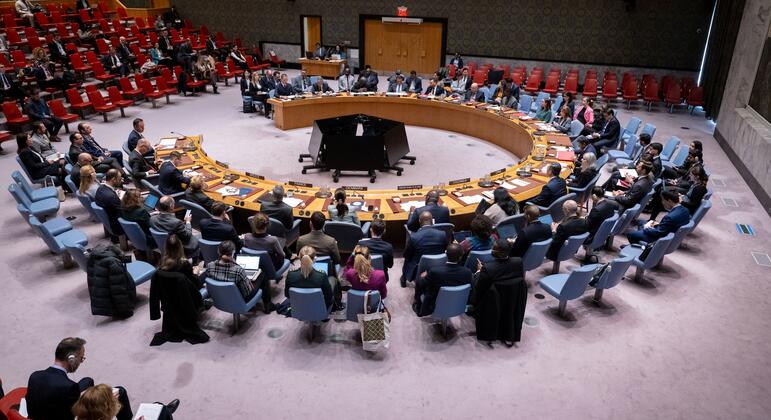

Security Council Weighs Future of UN War Crimes Mechanism as Closure Nears
Introduction
As global conflicts escalate and new crises emerge, the United Nations Security Council (UNSC) finds itself at a critical juncture. The future of the UN’s war crimes mechanism hangs in the balance, with discussions intensifying about its effectiveness, relevance, and sustainability. This article explores the intricacies of the UNSC’s role in addressing war crimes, the challenges it faces, and potential paths forward as the closure of its current mechanisms looms.
Historical Context of War Crimes Accountability
The Genesis of War Crimes Trials
War crimes trials can be traced back to the aftermath of World War II, with the Nuremberg Trials setting a precedent for international accountability. Over the decades, various tribunals have addressed atrocities in the former Yugoslavia, Rwanda, and more recently, special courts for Sierra Leone and Cambodia. These efforts have established a framework for prosecuting war crimes, but the efficacy of these mechanisms has been met with mixed results.
Evolution of the UN’s Role
The United Nations has played a pivotal role in the establishment of international norms surrounding war crimes and humanitarian law. Initiatives led by the UN have resulted in the establishment of International Criminal Tribunals (ICTs) and the International Criminal Court (ICC), which serve as critical avenues for accountability. However, the effectiveness of these institutions increasingly faces scrutiny, especially in light of current geopolitical tensions.
Challenges Facing the UNSC’s War Crimes Mechanism
Political Disparities Among Member States
One of the foremost challenges to the UNSC’s war crimes mechanism is the political landscape among its members. Veto power held by states such as the United States, Russia, and China often results in gridlock. This can hinder decisive action, particularly in cases where powerful nations have vested interests in specific conflicts.
Underfunding and Resource Limitations
Effective war crimes prosecution requires sufficient funding and resources. The UNSC’s war crimes mechanisms often face financial constraints that inhibit their operational capabilities. Limited budgets restrict investigations, weaken legal processes, and ultimately inhibit the delivery of justice.
Public Perception and Trust
For war crimes mechanisms to be effective, they must command public confidence. However, skepticism regarding their impartiality and efficiency can erode trust. This skepticism is often fueled by high-profile cases that seem to languish in procedural limbo, leading the public to believe that justice is out of reach.
The Viability of Current Mechanisms
The Role of the ICC
The International Criminal Court (ICC) has emerged as a cornerstone of international jurisprudence for war crimes. Its mandate to prosecute individuals for genocide, war crimes, and crimes against humanity is vital. However, criticisms of the ICC’s limited jurisdiction, reliance on state cooperation, and allegations of bias have fueled debates regarding its future effectiveness.
Special Tribunals and Hybrid Courts
Special tribunals and hybrid courts combine domestic and international efforts to pursue justice. While these courts can be tailored to specific contexts, their establishment often hinges on the approval of the UNSC, which can again fall prey to political maneuvering.
The Need for Reform and Innovation
The evolving nature of warfare, coupled with technological advancements such as cyber warfare and drone strikes, demands a rethinking of how war crimes are defined and prosecuted. The UNSC must consider reforms that enable it to adapt to modern conflicts effectively. This may involve updating definitions of war crimes and embracing an innovative approach to justice.
The Path Forward: Strategic Recommendations
Strengthening Local Judicial Systems
Empowering local judicial systems can enhance the effectiveness of war crimes prosecutions. The UNSC should invest in capacity-building initiatives that bolster domestic legal frameworks. This allows nations to take ownership of accountability efforts, which can lead to more culturally relevant approaches to justice.
Enhancing International Collaboration
In an increasingly interconnected world, international cooperation is crucial. The UNSC should foster partnerships with regional bodies, non-governmental organizations, and civil society to enhance the reach and effectiveness of war crimes accountability mechanisms. Collaborative platforms will also enrich the evidence-gathering processes essential for prosecution.
Increasing Funding and Resources
A sustained commitment to funding is vital for the success of war crimes mechanisms. The UNSC must advocate for increased financial resources, potentially through member state contributions and partnerships with international organizations such as the World Bank or the European Union.
Emphasizing Victim-Centric Approaches
Incorporating victim voices into the accountability discourse can reinvigorate public trust in war crimes mechanisms. Ensuring that victims have access to justice and reparations is essential. The UNSC must prioritize victim-centric approaches that acknowledge the profound impacts of war crimes on individuals and communities.
Conclusion
The future of the UN’s war crimes mechanism is yet undetermined, but the urgency for reform is clear. As the Security Council grapples with political complexities, underfunding, and public confidence issues, proactive measures are necessary for sustaining the fight against impunity. By emphasizing collaboration, local capacity-building, resource allocation, and victim-centric approaches, the UNSC can pave a path toward a more effective international war crimes accountability system. As the world watches, the time for decisive action is now.
In crafting this article, SEO optimization strategies were employed to ensure visibility, including keyword placement such as “UN Security Council,” “war crimes,” and “international accountability,” along with strategic headings for better readability and indexing.
For more details and the full reference, visit the source link below:
Read the complete article here: https://news.un.org/feed/view/en/story/2026/06/1167715