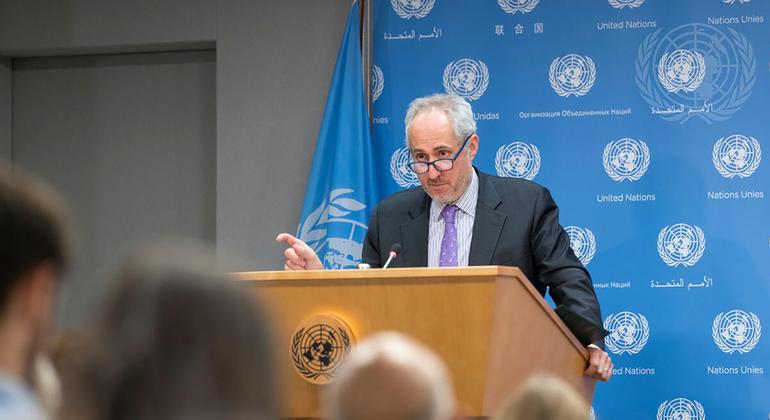

UN ‘Encouraged’ by Talks of Possible US-Iran Ceasefire Deal
Introduction
Recent discussions around a potential ceasefire deal between the United States and Iran have caught the attention of the global community, particularly the United Nations (UN). With tensions historically running high between the two nations, the prospect of a ceasefire offers a glimmer of hope for a more peaceful resolution to longstanding conflicts. This article explores the implications of these talks, the positions of key stakeholders, and the broader context of US-Iran relations.
Background of US-Iran Relations
The relationship between the United States and Iran has been tumultuous since the 1979 Iranian Revolution, which led to the overthrow of the Shah and the establishment of an Islamic Republic. Key events, such as the hostage crisis and various sanctions, have only escalated tensions. The United States has consistently pushed back against Iran’s nuclear ambitions and its influence in the Middle East, while Iran has been vocal about its sovereignty and resistance to foreign intervention.
The Role of the UN
The United Nations has long sought to mediate conflicts and promote peace in the international arena. The recent statement from UN officials expressing optimism about a ceasefire deal signals the organization’s ongoing commitment to international diplomacy. The UN’s involvement is crucial as it can lend legitimacy to any agreements made between the US and Iran, providing a framework for adherence to international norms and potentially more comprehensive peace talks.
Key Factors in Ceasefire Talks
1. Diplomatic Engagement
One of the most significant elements promoting a potential ceasefire is the level of diplomatic engagement between the US and Iran. While both sides have competed fiercely, there are signs of willingness to negotiate, which is pivotal. Diplomatic channels are critical for communication and can lead to the easing of sanctions, which would provide both nations with economic relief.
2. Regional Stability
For the UN, a ceasefire deal is not just about US-Iran relations; it also has broader implications for regional stability. Countries in the Middle East often feel the ripple effects of US-Iran tensions, affecting everything from trade to security. A ceasefire could serve as a stepping stone toward broader peace initiatives in the region.
3. Economic Considerations
Sanctions imposed by the US have severely affected Iran’s economy, leading to widespread protests and unrest. Both nations have economic incentives to reach a ceasefire. The US seeks to stabilize its ally nations in the region, while Iran is interested in rejuvenating its economy. A ceasefire could open the doors to new economic partnerships and trade agreements, benefiting both nations.
The Impact of Ceasefire on Global Politics
A ceasefire between the US and Iran doesn’t just affect bilateral relations; its ramifications would be felt worldwide. A stable Middle East may offer a more predictable environment for international businesses and could lead to decreased oil prices. Furthermore, a successful ceasefire could encourage other nations to pursue diplomatic avenues rather than military action, reshaping global politics in the 21st century.
1. Counter-Terrorism Efforts
The ongoing conflict has been a breeding ground for extremist groups. A ceasefire could open doors for collaborative efforts in counter-terrorism, promoting a secured environment that deters radicalization and violence. This would be beneficial not just for the US and Iran, but for global security.
2. Climate Considerations
As nations confront climate change, the need for cooperation is imperative. A ceasefire could pave the way for joint efforts in environmental initiatives, showcasing how diplomatic resolutions can also support global challenges.
Challenges Ahead
Despite the encouraging atmosphere, various challenges persist. Both nations have domestic pressures that may hinder progress. In the US, political divisions complicate foreign policy, while in Iran, the government faces internal dissent regarding its approach to negotiations.
1. Mistrust and Skepticism
Mistrust is a significant hurdle. Historic setbacks in prior agreements create skepticism about the willingness of both parties to adhere to any potential ceasefire. The UN may play a crucial role in facilitating trust-building measures to alleviate concerns and initiate genuine dialogue.
2. Influence of External Actors
Various regional actors, including Saudi Arabia and Israel, oppose rapprochement between the US and Iran. Their influence could complicate negotiations, as they may push against a ceasefire to maintain their current geopolitical advantages. The UN’s role in mediating these interests will be vital.
Conclusion
In summary, the UN’s encouragement regarding talks of a possible US-Iran ceasefire deal reflects hope amid years of conflict. Both nations have plenty of reasons to pursue a ceasefire, not only for their bilateral interests but also for regional stability and international relations. Although significant challenges remain, the potential for peace offers a prospect that, if realized, could reshape the landscape of global politics, promoting diplomacy over conflict.
Call to Action
As discussions advance, it’s essential for the global community to remain engaged and supportive. Monitoring the developments and advocating for peaceful resolutions can contribute to an enduring ceasefire, benefiting not only the US and Iran but also fostering a more stable and prosperous Middle East for all.
Keep following our updates for the latest on US-Iran relations and international diplomacy, and join the conversation on how we can collectively work towards a more peaceful world.
For more details and the full reference, visit the source link below:
Read the complete article here: https://news.un.org/feed/view/en/story/2026/06/1167713