
Sudan is an Atrocities Laboratory: UN Aid Chief’s Warning at Berlin Conference
Introduction
In recent years, Sudan has been at the center of an international humanitarian crisis, marked by profound human rights violations and widespread suffering. During a recent conference in Berlin, the UN aid chief issued a stark warning, describing Sudan as an “atrocities laboratory.” This phrase encapsulates the environment of impunity, violence, and humanitarian disaster unfolding in the country. This article aims to dissect the implications of this statement while offering insights into the ongoing situation in Sudan.
Context: The Crisis in Sudan
Sudan has a long history of conflict, characterized by civil wars, ethnic strife, and government repression. The Darfur conflict, which erupted in 2003, was a significant turning point that exposed the systematic brutality inflicted upon civilians. Fast forward to the current day, and the humanitarian crisis has only worsened. Millions are displaced, and food insecurity remains a pressing concern, compounded by economic instability and political upheaval.
Ongoing Conflicts and Human Rights Violations
The wars in Sudan are not merely remnants of the past. The nation is faced with complex conflicts involving various factions, including tribal militias and government forces. The situation is exacerbated by the resurgence of violence in regions like Darfur, South Kordofan, and Blue Nile. The Sudanese Armed Forces (SAF) and the Rapid Support Forces (RSF) have been accused of orchestrating widespread atrocities, including mass killings, sexual violence, and ethnic cleansing.
The UN Aid Chief’s Perspective
At the Berlin conference, the UN aid chief, Martin Griffiths, shed light on the gravity of the situation. His remark that Sudan has become an “atrocities laboratory” serves as a critical warning that cannot be ignored. According to Griffiths, the scale of violence and persecution has reached alarming levels, requiring immediate international action.
Key Points from the Berlin Conference
-
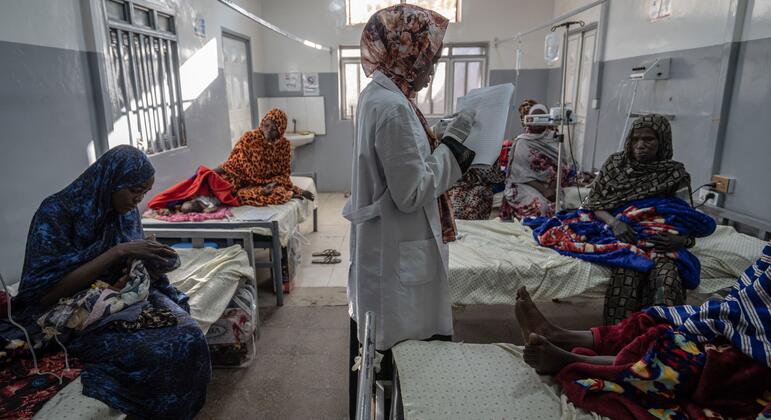
Humanitarian Needs: Griffiths emphasized that nearly 24 million people in Sudan need humanitarian assistance, representing over half the country’s population. This staggering number reflects not only the ongoing violence but also the collapse of basic services, leading to rampant malnutrition and disease.
-
International Responsibility: The UN aid chief called for greater international engagement, insisting that the global community must not turn a blind eye to the atrocities. Griffiths suggested that countries need to provide not just humanitarian support but also engage in diplomatic efforts to restore peace and stability.
-
Impunity and Accountability: The culture of impunity in Sudan allows perpetrators of human rights abuses to operate without fear of repercussions. Griffiths urged for accountability mechanisms to be established to ensure that those responsible for atrocities are brought to justice.
The Consequences of Inaction
Ignoring the plight of Sudanese people could have far-reaching consequences, not only for the region but also for global stability. The humanitarian crisis can lead to:
Regional Instability
The spilling over of violence from Sudan into neighboring countries could destabilize parts of Africa already grappling with their own challenges. Refugees fleeing the violence may place severe strains on the resources of surrounding nations, leading to further humanitarian crises.
Global Health Risks
The lack of medical care and the spread of diseases such as cholera pose risks that extend beyond Sudan’s borders. The emergence of new diseases in crowded refugee camps can lead to global health challenges that require urgent attention.
Rise in Extremism
Desperation and lawlessness in conflict zones can create fertile ground for extremist ideologies to take root. Vulnerable populations may turn to extremist groups for protection or livelihood, further complicating efforts to restore peace and order.
The Role of Technology in Human Rights Monitoring
In the age of social media and real-time reporting, technology can be a powerful tool in documenting human rights abuses. Organizations and individuals can leverage technology to disseminate information about atrocities, raising awareness and increasing pressure on authorities for accountability.
Citizen Journalism and Reporting
Social media platforms allow witnesses to share their experiences, creating a digital archive of abuses. This citizen journalism can inform international bodies and keep the world aware of the ongoing crisis in Sudan.
Satellite Imagery and Surveillance
Innovations like satellite imagery can also be employed to monitor troop movements and identify patterns of violence. This can be crucial for UN investigations, as real-time data can offer concrete evidence of human rights abuses.
Conclusion: The Urgency for Action
The UN aid chief’s declaration of Sudan as an “atrocities laboratory” serves as a powerful reminder of the urgent need for international attention and action. The plight of the Sudanese people cannot be ignored, and there must be a concerted effort to address the challenges they face.
In essence, it is not just about providing humanitarian aid; it’s about establishing a sustainable framework for peace, justice, and accountability in Sudan. The world must heed the warnings from experts like Griffiths and mobilize to prevent further escalation of the crisis. The time for action is now, for the sake of Sudan and for global humanity.
Call to Action
Readers are encouraged to get involved by educating themselves on the situation, advocating for international action, and supporting humanitarian organizations working on the ground in Sudan. The convergence of collective efforts can make a significant difference in alleviating the suffering of millions of Sudanese lives.
For more details and the full reference, visit the source link below:
Read the complete article here: https://news.un.org/feed/view/en/story/2026/04/1167309