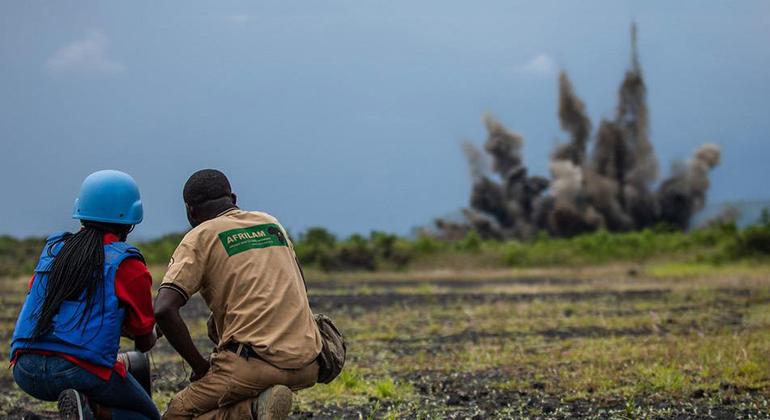

Deminers Race to Keep Up with Military Technology
Introduction
In recent years, the rapid advancement of military technology has posed significant challenges for demining efforts worldwide. As armed conflicts evolve and new weapons are developed, the risks associated with landmines and explosive remnants of war (ERW) are intensified. This article will explore the implications of military technology on demining operations, the challenges faced by deminers, and the innovative solutions being adopted to keep pace with these advancements.
The Rise of Military Technology
The advancements in military technology are reshaping the battlefield. From precision-guided munitions to autonomous systems and artificial intelligence, modern warfare has become increasingly complex. This technological progress, while beneficial for combat, has also resulted in the proliferation of landmines and other explosive devices, creating long-term humanitarian crises.
The Proliferation of Landmines
Landmines are designed to incapacitate or kill unsuspecting individuals. They can remain dormant for years, posing a significant threat to civilians long after a conflict has ended. Newer military technologies have led to the development of more sophisticated and harder-to-detect mines, complicating the demining process.
The Challenges Faced by Deminers
Demining operations are fraught with challenges, particularly in the context of advancing military technology. These challenges can be categorized as follows:
Increased Complexity of Mines
Modern mines may incorporate advanced materials that make them harder for traditional detection methods to identify. Moreover, the development of smart mines, which can be programmed to activate under specific conditions, poses a unique challenge. These technologies require deminers to adapt their detection and neutralization strategies continuously.
Evolving Conflict Landscapes
As military technology evolves, so do the landscapes in which these conflicts occur. Urban warfare, for instance, has become more prevalent, with landmines being deployed in densely populated areas. This shift not only complicates detection but also heightens the risk to civilians.
Funding and Resource Allocation
Demining efforts often rely on international funding and support, which can fluctuate based on geopolitical priorities. As military technology continues to advance, the allocation of resources toward demining may diminish, leaving deminers with limited capabilities to tackle emerging threats.
Innovative Solutions in Demining Technology
To keep pace with military technology, the demining sector is increasingly turning to innovative solutions that leverage advancements in various fields. Here are some notable innovations:
Use of Drones and Robotics
Drones equipped with ground-penetrating radar and other sensors are being utilized to scan and map areas suspected to contain landmines. These unmanned systems can cover vast areas quickly, providing valuable data that deminers can use to prioritize their efforts.
Additionally, ground-based robots are being deployed to safely detonate mines in hard-to-reach or dangerous areas. These robotic systems reduce the risk to human life and can operate in conditions that may be hazardous for deminers.
Artificial Intelligence and Machine Learning
Artificial intelligence (AI) and machine learning algorithms are enhancing the detection capabilities of demining technologies. By training algorithms on vast datasets of known mine signatures, AI can improve the accuracy of detection systems, reducing false positives and enabling deminers to focus their efforts where they are needed most.
Improved Detection Equipment
Advancements in materials science have led to the development of lightweight, portable, and highly sensitive detection devices. These new tools offer better accuracy and increased functionality, enabling deminers to operate more efficiently and safely. Enhanced sensor technologies are also being integrated into hand-held devices, making them indispensable in the field.
Collaboration and Knowledge Sharing
To effectively tackle the challenges posed by advancing military technology, collaboration between demining organizations, governments, and technology developers is crucial. Here are key areas for collaboration:
Training and Capacity Building
Equipping deminers with the latest knowledge and skills is essential. Training programs should integrate modern technologies and their applications in demining, ensuring that deminers are prepared to face emerging threats effectively.
International Partnerships
International collaboration can bolster resources and expertise. By partnering with defense agencies, universities, and tech companies specializing in advanced technologies, demining organizations can access innovative solutions and practices that enhance their capabilities.
Data Sharing and Standardization
A standardized approach to data collection and reporting can facilitate knowledge sharing among demining organizations. Utilizing shared databases of minefield maps, detection techniques, and outcomes can drive continuous improvement and effectiveness in demining operations.
Conclusion
The race between military technology advancements and demining efforts is a pressing challenge that requires immediate attention and innovative solutions. As deminers strive to keep pace with evolving technologies, collaboration and knowledge sharing will be vital to overcoming the obstacles posed by modern warfare. Investing in research, adopting new technologies, and fostering international partnerships will enable demining organizations to effectively address the ongoing threat of landmines and ensure the safety of communities affected by conflict.
Ultimately, the future of demining hinges not only on technological advancements but also on a collective commitment to prioritizing humanitarian needs and the protection of civilian lives in the face of evolving military landscapes.
For more details and the full reference, visit the source link below:
Read the complete article here: https://news.un.org/feed/view/en/story/2026/04/1167247