
Guterres Warns of ‘Wider War’ as Middle East Conflict Enters Second Month
Introduction
As the Middle East conflict enters its second month, UN Secretary-General António Guterres has issued a stark warning about the potential for a “wider war” in the region. His remarks come amid escalating violence and humanitarian crises, prompting calls for international intervention and dialogue. This article explores the ongoing conflict, its implications, and the urgent need for a concerted global response.
Background of the Conflict
The current conflict traces its roots to longstanding tensions in the region, particularly between Israel and Palestine. Triggered by territorial disputes, political strife, and historical grievances, the violence has recently escalated dramatically. The situation has a complex history, involving issues such as land rights, national identity, and religious significance, affecting millions of lives.
Key Events
Significant events in the escalation of the conflict include:
- Increased Military Engagement: Both sides have intensified military operations, leading to civilian casualties and widespread destruction.
- International Responses: Various countries have reacted differently to the situation, some condemning the violence while others offer direct support to either side.
Guterres’ Warning
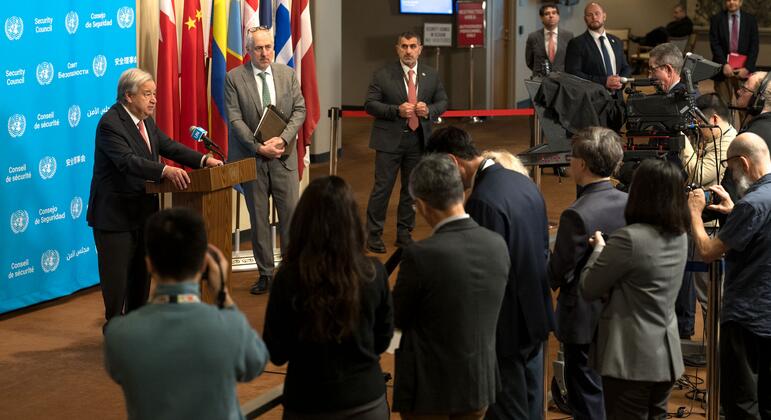
António Guterres’ warning about a “wider war” carries significant weight. He emphasized that the recent spike in violence could spill over into neighboring regions, exacerbating an already volatile environment. The Secretary-General highlighted the urgent need for de-escalation and diplomacy.
The Humanitarian Crisis
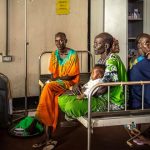
As the conflict continues, a humanitarian crisis looms, with thousands displaced and in dire need of assistance. According to UN estimates, the number of people affected by the violence is in the millions, leading to concerns about food security, healthcare, and basic living conditions.
Global Implications
The fallout from this conflict is not isolated to the Middle East. A wider war could destabilize global markets, create new refugee crises, and have significant geopolitical ramifications. Countries with vested interests in the region, including the United States, Russia, and various European nations, may find themselves drawn into a larger conflict.
Calls for Peace
In response to Guterres’ warning, world leaders and international organizations are intensifying their calls for peace. A multilateral approach is seen as crucial for addressing the root causes of the conflict.
Diplomatic Initiatives
- United Nations Efforts: The UN is advocating for a ceasefire and assembling dialogues between conflicting parties.
- Peace Proposals: Various peace proposals have emerged, aimed at a two-state solution that respects both Israeli and Palestinian rights.
The Role of Civil Society
Civil society organizations and grassroots movements are playing a pivotal role in advocating for peace and humanitarian assistance. These organizations focus on providing aid to affected populations and promoting dialogue among conflicting parties.
Grassroots Movements
Grassroot efforts, particularly those involving youth and women, are gaining momentum. Many are advocating for non-violent solutions and fostering mutual understanding between communities.
The Need for International Unity
As the conflict continues to evolve, the need for international unity becomes ever more apparent. A collective stance against violence, along with support for humanitarian efforts and diplomacy, is essential to curb the potential for a wider war.
Strengthening Alliances
Countries that typically have differing views on the Middle East need to find common ground to address the crisis. Strengthening international alliances and promoting collaboration among nations can foster a more stable environment.
Conclusion
As the Middle East conflict enters its second month, Guterres’ warning serves as a crucial reminder of the potential for a wider war. The stakes are high—not only for those directly involved but for global stability as a whole. The international community must unite to work towards peace, support humanitarian efforts, and facilitate productive dialogues. Only through concerted action will it be possible to mitigate the conflict’s devastating impact and prevent a broader escalation of violence.
SEO Optimization Strategies
To optimize this article for search engines, we’ve incorporated relevant keywords such as “Middle East conflict,” “Guterres warning,” “wider war,” “humanitarian crisis,” and “peace initiatives.” These keywords should be naturally integrated throughout the text, including headings, subheadings, and body content, to improve search visibility. Additionally, using internal and external links to reputable sources will enhance credibility and audience engagement.
For more details and the full reference, visit the source link below:
Read the complete article here: https://news.un.org/feed/view/en/story/2026/04/1167244