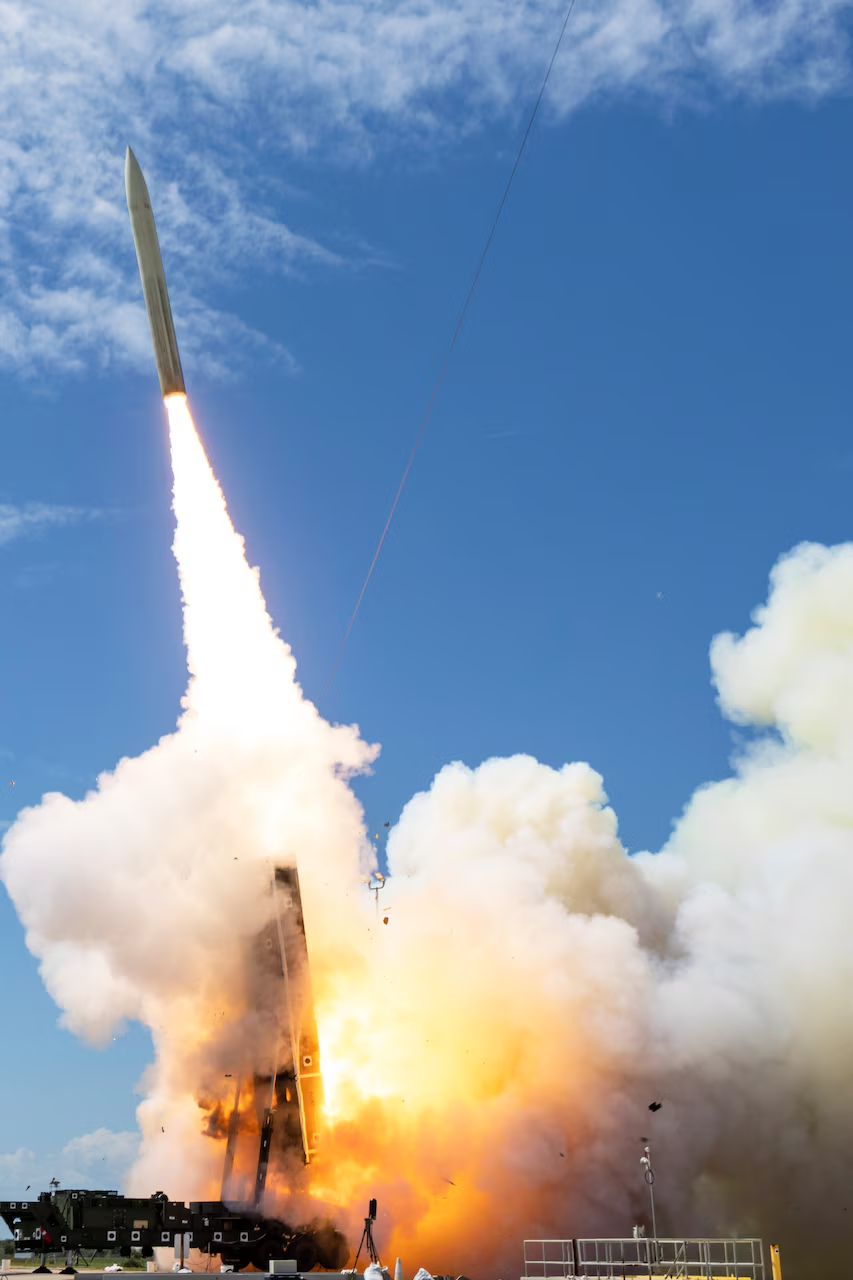

Army and Navy Continue Tests of Hypersonic Missile Technologies
Introduction
In recent years, the landscape of modern warfare has undergone significant transformation. One of the most notable advancements has been in the realm of hypersonic missile technology. The U.S. Army and Navy are at the forefront of this development, conducting rigorous tests to enhance national security. This article will delve into the latest developments in hypersonic missile tests, their implications for military strategy, and the broader impact on global security.
What Are Hypersonic Missiles?
Hypersonic missiles are defined as projectiles that can travel at speeds greater than Mach 5 (approximately 3,836 miles per hour). Unlike traditional ballistic missiles, which follow a predictable arc, hypersonic missiles can maneuver during flight, making them far more difficult to detect and intercept. This capability poses a significant challenge for current missile defense systems, thereby reshaping the strategic landscape of defense policy.
Recent Tests by the U.S. Army and Navy
The U.S. Army and Navy’s continued tests of hypersonic missile technologies signify a proactive approach to address emerging threats. Recent demonstrations have focused on perfecting the design and integration of these systems, assessing their performance in various operational environments.
Army Testing Initiatives
The U.S. Army has undertaken multiple test series aimed at evaluating the capabilities of hypersonic systems. These assessments cover various dimensions, including speed, accuracy, range, and maneuverability. For instance, the Army’s Long Range Hypersonic Weapon (LRHW) program recently completed a successful flight test, featuring a hypersonic glide body that proved its ability to strike targets with precision.
Navy’s Approach to Hypersonic Technology
The U.S. Navy is also deeply entrenched in the hypersonic missile race. The Navy is focusing on integrating these advanced systems onto its ships and submarines, enhancing its strike capabilities. The introduction of the Conventional Prompt Strike (CPS) system exemplifies the Navy’s efforts to develop versatile and lethal hypersonic strike options.
Strategic Implications of Hypersonic Missile Development
The development and testing of hypersonic missiles have profound implications for global security and military strategy.
Deterrence and Defense
With the ability to evade conventional missile defenses, hypersonic missiles could serve as a powerful deterrent against potential adversaries. The U.S. military aims to employ these systems in a way that reinforces its global presence while curbing aggressive actions from adversaries like Russia and China.
Escalation of Arms Race
However, the pursuit of hypersonic capabilities may contribute to an arms race. Other nations will likely accelerate their own hypersonic programs in response to the U.S. efforts. This dynamic creates a complex security environment where nations must balance both offensive capabilities and protective measures.
Technology and Infrastructure
The successful deployment of hypersonic missiles relies heavily on advanced technology and infrastructure.
Research and Development
The U.S. Department of Defense is investing significantly in research and development for hypersonic technologies. This investment encompasses collaborations with private sector partners and academic institutions, harnessing innovation from various sectors. As a result, breakthroughs in materials science, propulsion technologies, and guidance systems are expected to enhance the effectiveness of hypersonic missiles.
Testing Facilities and Resources
To optimize these advanced systems, the Army and Navy have established extensive testing facilities. These include specialized ranges designed to simulate real-world conditions for hypersonic systems. The data gathered from these tests will inform future designs and improve overall effectiveness.
Challenges Facing Hypersonic Missile Development
Despite the advancements, several challenges remain in the hypersonic missile development process.
Technical Hurdles
The engineering challenges associated with hypersonic flight are significant. Designing materials capable of withstanding extreme temperatures and aerodynamic stress is essential. The speed at which these missiles travel introduces complexities in navigation and target acquisition, which need to be rigorously addressed.
Policy and Ethical Concerns
The deployment of hypersonic missiles raises several ethical and policy-related questions. As these systems become more prominent, international norms and agreements surrounding their use will need to be established. The potential for miscalculation or accidental escalation is heightened with the introduction of such advanced technologies.
The Future of Hypersonic Missile Programs
As the U.S. Army and Navy continue their hypersonic missile tests, the future appears increasingly oriented towards the development of these advanced systems.
Enhanced Collaboration
Future initiatives will likely involve enhanced collaboration between the Army, Navy, and Air Force, combining resources for more comprehensive testing and operational integration. This collaboration aims to create a unified hypersonic strategy that bolsters U.S. military capabilities.
International Partnerships
Given the global nature of security threats, forming international partnerships for hypersonic missile technology is crucial. Collaborations with allied nations can facilitate information sharing and develop faster means of countering adversarial threats.
Conclusion
The continued tests of hypersonic missile technologies by the U.S. Army and Navy signal an essential evolution in military capability and strategy. With the ability to move rapidly and maneuver unpredictably, hypersonic missiles represent both an opportunity for strategic advantage and a potential flashpoint in international relations. As the U.S. navigates these complexities, it will need to balance technological advancement with ethical considerations and global security dynamics. As the military landscape evolves, hypersonic technology will undoubtedly play a pivotal role in shaping the future of warfare.
Call to Action
Stay informed about the latest advancements in hypersonic missile technology and their implications for global security. Subscribe to our newsletter for more updates, insights, and expert analysis on military developments worldwide.
For more details and the full reference, visit the source link below: