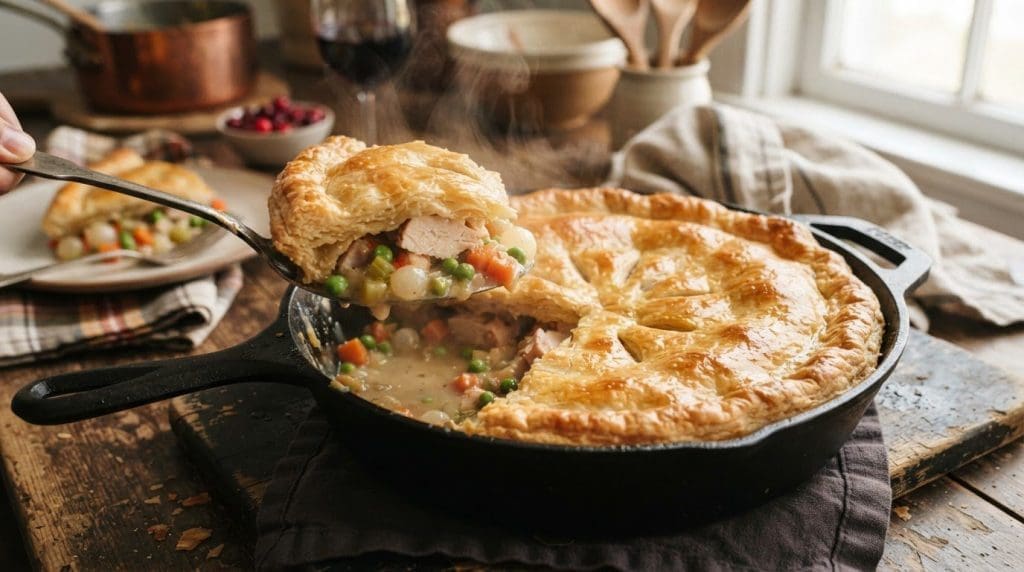

ST. LOUIS, MO — November 25, 2026 — St. Louis Restaurant Review — Turkey pot pie is one of the most satisfying ways to turn Thanksgiving leftovers into an entirely different dinner. Instead of serving another plate of reheated turkey, transform the remaining meat into a creamy, vegetable-filled meal beneath a golden pastry crust. A cast-iron skillet makes this classic comfort food especially convenient because you can prepare the filling on the stovetop and bake it in the same pan.
For St. Louis families preparing for the holiday, this recipe offers a chance to plan a second meal before the first is even served. Save a few cups of cooked turkey, some vegetables, and a little gravy, and you will have the foundation for a hearty weekend dinner. The following original recipe is designed for home cooks using ordinary supermarket ingredients and a 10-inch oven-safe skillet.
Why turkey pot pie is ideal for Thanksgiving leftovers
Turkey pot pie is especially useful because roasted turkey is versatile, but reheating lean breast meat repeatedly can make it dry. A creamy filling provides moisture and introduces a new combination of flavors. Dark meat works equally well and brings a richer taste to the finished dish. Combining both types of meat is an excellent option when carving a large holiday bird.
Turkey pot pie also makes room for vegetables that might otherwise go unused. Plain cooked carrots, peas, green beans, and corn can all contribute color and texture. Leftover gravy can replace part of the stock, as long as it is still safe to eat. The result is a flexible meal that does not require another elaborate shopping trip.
Easy cast iron turkey pot pie recipe
Yield: Approximately 6 servings. Preparation: 20 minutes. Cooking: Approximately 40–50 minutes. Resting: 10 minutes. Equipment: 10-inch oven-safe cast iron skillet, baking sheet, wooden spoon and food thermometer. Times are estimates and will vary with the oven and ingredients.
Ingredients
- 3 cups cooked turkey, diced or shredded
- 3 tablespoons unsalted butter
- 1 small onion, diced
- 1 cup diced carrots
- 1/2 cup diced celery
- 1/3 cup all-purpose flour
- 1 1/2 cups low-sodium chicken or turkey stock
- 3/4 cup whole milk
- 1 cup frozen peas
- 1/2 teaspoon dried thyme
- 1/4 teaspoon black pepper
- Salt to taste
- 1 refrigerated pie crust, large enough to cover the skillet
- 1 egg, beaten, for brushing the pastry (optional)
Step 1: Prepare the skillet and vegetables
Preheat the oven to 400°F. Melt the butter in the skillet over medium heat. Add the onion, carrots and celery. Cook for approximately six to eight minutes, stirring occasionally, until the onion becomes translucent and the vegetables begin to soften. If using already cooked vegetables, add them later with the turkey instead of cooking them again at this stage.
Step 2: Make the creamy pot pie filling
Sprinkle the flour over the softened vegetables and stir continuously for about one minute. Gradually pour in the stock, stirring to prevent lumps. Add the milk, thyme, and pepper. Bring the mixture to a gentle simmer and cook for three to five minutes until it thickens enough to coat a spoon. Avoid a vigorous boil, which can scorch the dairy mixture.
Step 3: Add the leftover turkey
Fold in the cooked turkey and peas. Add any other suitable cooked vegetables now. Taste the sauce and adjust the seasoning. Remove the skillet from the heat and allow the filling to cool slightly before applying the pastry. If the filling looks excessively thick, stir in a small splash of stock. If the skillet is too full, transfer some filling to a separate oven-safe dish to prevent overflow.
Step 4: Cover with pastry and bake
Carefully place the pie crust over the skillet, keeping hands away from the hot metal. Trim or fold excess pastry inward and cut several small vents in the center so steam can escape. Brush the crust with beaten egg if desired. Place the skillet on a rimmed baking sheet and bake for approximately 25 to 35 minutes, until the pastry is golden and the filling reaches 165°F in the center. If the crust browns too quickly, loosely cover it with foil and continue baking until the filling reaches the safe temperature.
Step 5: Rest and serve
Remove the skillet using dry oven mitts, remembering that the handle will remain extremely hot. Let the turkey pot pie rest for approximately ten minutes. This allows the sauce to settle and makes serving easier. Scoop portions into shallow bowls or onto dinner plates. A crisp green salad or lightly dressed cabbage slaw provides a refreshing contrast to the rich filling.
How to use leftover Thanksgiving gravy
Leftover gravy can bring additional roasted flavor to the recipe. Replace up to half a cup of the stock with gravy, then adjust the remaining liquid to match the sauce’s thickness. Because gravy often contains salt and thickening agents, taste the filling before adding more seasoning. A very thick gravy may require additional stock or milk.
Keep the overall balance in mind. The turkey pot pie filling should be creamy rather than watery, and it should flow slowly from a spoon. A loose sauce may bubble over or leave the pastry soggy, while a sauce that is too thick can become pasty as the pie cools.
Why cook turkey pot pie in cast iron?
Cast iron retains heat well and allows cooks to prepare a stovetop filling before moving the same pan into the oven. This reduces the number of dishes required and gives the meal a rustic presentation suitable for family-style serving. A well-seasoned skillet or an enameled cast-iron pan works well for this recipe.
However, cast iron is heavy, and its handle becomes hot in the oven. Use a stable trivet when bringing the skillet to the table. Do not store leftover pot pie in the skillet for extended periods; transfer it to a suitable covered food storage container instead.
Turkey pot pie variations for different tastes
Home cooks can adapt the recipe to suit the ingredients they have available. Puff pastry can replace traditional pie crust for a lighter, layered topping; follow the pastry package instructions and ensure the filling reaches the proper temperature. Refrigerated biscuits are another option, although they may need different baking times.
For a richer filling, substitute a small portion of the milk with cream. Mushrooms can add savory depth when sautéed with the onions. A pinch of sage or chopped parsley can complement the traditional Thanksgiving flavors without overwhelming the turkey. You can also add cooked potatoes in modest quantities, though too many may make the filling unnecessarily heavy.
For households with dietary restrictions, use suitable dairy-free milk and butter alternatives or a gluten-free thickener and pastry. Check every ingredient, including prepared gravy and stock, for relevant allergens.
Thanksgiving leftover food safety
Food safety is particularly important when preparing a turkey pot pie from previously cooked meat. According to standard USDA leftover food safety guidance, refrigerate perishable leftovers within two hours, or within one hour when temperatures exceed 90°F. Keep the refrigerator at 40°F or below and use refrigerated leftovers within three to four days or freeze them.
Divide large quantities of turkey into shallow containers to help them cool quickly. Do not use meat or gravy left at room temperature beyond the recommended limits. Reheating does not make improperly stored food reliably safe. Use a food thermometer to confirm that reheated leftovers reach 165°F. Making a new dish is not a reason to extend the original turkey’s storage window.
Frequently asked questions about turkey pot pie
Can I make turkey pot pie filling ahead of time?
Yes. Refrigerate the prepared filling promptly in a shallow covered container, within the safe storage period for the original leftovers. Add the pastry just before baking. A chilled filling may require extra cooking time.
Can I make turkey pot pie without cast iron?
Yes. Prepare the filling in a saucepan and transfer it to an oven-safe pie dish or casserole before adding the crust. Choose a dish with sufficient capacity to accommodate bubbling filling.
Can I freeze leftover turkey pot pie?
Yes, as long as the ingredients have been handled safely. Freeze portions in airtight freezer-safe containers. Thaw in the refrigerator and reheat to 165°F. The pastry may soften after freezing, but reheating in an oven can help restore some crispness.
Can I substitute chicken for turkey?
Absolutely. Cooked chicken works with the same basic sauce and vegetables, making this a useful comfort food recipe year-round rather than only during Thanksgiving.
3 tips for a better turkey pot pie
First, avoid putting pastry over a vigorously bubbling filling. Let the sauce settle briefly so the dough remains easy to handle. Second, cut the turkey into similar-sized pieces to distribute the meat evenly throughout the skillet. Third, check the center with a food thermometer rather than relying only on the color of the crust. These simple steps help produce a turkey pot pie with a crisp topping and a creamy center.
Make the most of your Thanksgiving dinner
A cast-iron turkey pot pie shows how a little planning can turn holiday leftovers into a meal worth looking forward to. It can help reduce household food waste while providing a practical alternative to buying additional ingredients or serving the same holiday plate repeatedly. Save this recipe for the weekend after Thanksgiving, and adapt it to the vegetables and seasonings your family enjoys.
For more local dining coverage and food features, visit St. Louis Restaurant Review, or explore our online ordering resources when you’d rather let a local restaurant handle dinner.

