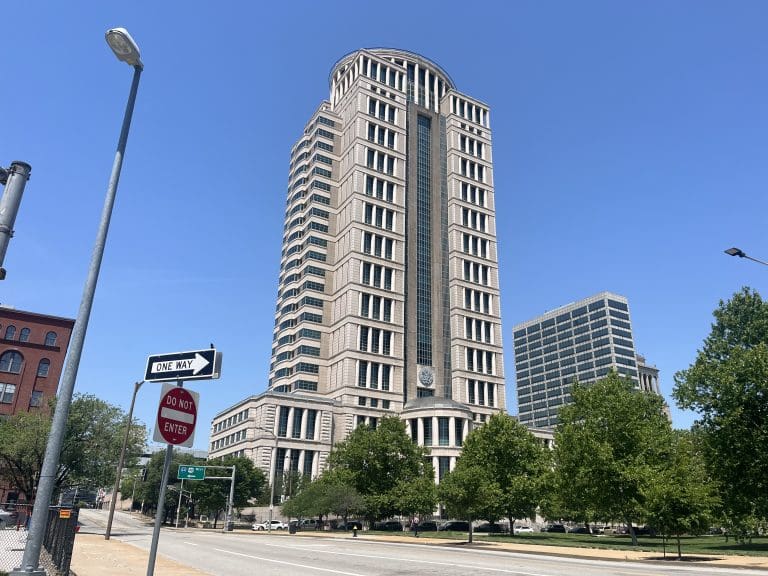

CAPE GIRARDEAU, MO – October 20, 2026 (STL.News) A federal judge has sentenced an Alabama man to nearly five years in prison for participating in the burglary of a southeastern Missouri pharmacy that resulted in the theft of approximately 16,800 prescription pills, including thousands containing controlled substances.
Cornelius Cardez Bray, 32, of Birmingham, Alabama, received a 57-month federal prison sentence Tuesday from U.S. District Judge Stephen N. Limbaugh Jr. The judge also ordered Bray to pay $2,174.66 in restitution to the pharmacy targeted in the March 13, 2025, burglary in Kennett, Missouri.
The sentencing concludes the federal prosecution of Bray, who admitted serving as the getaway driver while another Alabama man broke into the pharmacy and stole thousands of prescription medications.
His accomplice, David Jerome Evans, 32, also of Birmingham, previously received a 78-month federal prison sentence for his participation in the burglary.
Both men pleaded guilty to one count of intent to steal a controlled substance and one count of possession with intent to distribute hydrocodone, according to the U.S. Attorney’s Office for the Eastern District of Missouri.
The case involved an unusually large quantity of prescription medication, a suspicious vehicle with Tennessee license plates, a police pursuit and crash, and evidence recovered from the wreckage that helped investigators connect the defendants to the crime.
Missouri Pharmacy Burglary Involved 16,800 Pills
Federal prosecutors said the burglary occurred March 13, 2025, when Evans entered a pharmacy in Kennett, a community in Dunklin County in southeastern Missouri.
Bray remained outside and drove.
The men stole approximately 16,800 pills, including 7,500 hydrocodone pills and another 7,500 pills containing benzodiazepine drugs.
Together, those two categories accounted for 15,000 of the stolen pills. The Justice Department did not identify the remaining 1,800 pills in its sentencing announcement.
Hydrocodone is an opioid medication commonly prescribed to treat pain. Because of its potential for misuse, dependence, and addiction, it is regulated under federal controlled-substance laws.
Benzodiazepines are another category of controlled medications. They are prescribed for certain medical conditions, including anxiety disorders and seizures, depending on the medication and the patient’s circumstances.
Both categories can present serious health risks when misused, particularly when opioids and benzodiazepines are taken together.
The theft of such a large quantity of medications raised concerns beyond the pharmacy’s immediate financial loss.
Stolen prescription medications can become part of illegal distribution networks, where drugs are sold without medical supervision, legitimate prescriptions, or appropriate safeguards.
However, federal authorities did not disclose evidence establishing that the medications stolen in this particular burglary were subsequently distributed to consumers.
Suspicious Vehicle Helped Police Identify Suspects
A significant development in the investigation occurred when a Kennett police officer responding to the pharmacy burglary noticed a vehicle leaving town.
According to federal prosecutors, the vehicle displayed Tennessee license plates.
The officer remembered that several days earlier, someone in a passenger vehicle bearing Tennessee plates had been observed photographing another pharmacy in Kennett.
That earlier activity became significant when the officer encountered a similarly described vehicle while responding to the burglary.
The connection between the earlier suspicious activity and the vehicle leaving town prompted the officer to attempt a traffic stop.
Rather than stopping, Bray accelerated and fled from police.
The attempted stop developed into a pursuit that ended when Bray crashed the vehicle.
The crash provided investigators with an opportunity to recover evidence that would become important in the federal prosecution.
Police arrested Evans at the crash scene.
Bray initially escaped but was subsequently taken into custody.
The Justice Department did not specify how much time passed before Bray’s arrest or provide the precise location where he was apprehended.
Investigators Recovered Prescription Pills and Evidence
Officers examining the wreckage discovered numerous prescription pill bottles, according to the Justice Department.
The recovery provided physical evidence connecting the vehicle to the stolen medications.
Investigators also recovered a large blue crowbar and a black face mask.
The Justice Department identified those additional items in its July 6, 2026, announcement of Bray’s guilty plea.
Authorities also found Bray’s wallet and cellphone inside the crashed vehicle.
His personal belongings helped connect him to the vehicle police pursued after the burglary.
The federal announcements do not establish whether every stolen pill was recovered, and authorities did not provide a complete inventory of the medications recovered from the crash.
Nevertheless, the combination of prescription bottles, personal belongings, and other physical evidence formed an important part of the circumstances prosecutors documented.
The investigation illustrates how observations made before a crime can become significant when officers respond to a subsequent incident.
In this case, the officer’s recollection of a vehicle previously associated with suspicious activity near another pharmacy helped direct attention toward the vehicle leaving Kennett.
The Justice Department did not announce that the earlier photography resulted in any separate criminal charges.
Both Alabama Men Pleaded Guilty
The federal prosecution eventually resulted in guilty pleas from both defendants.
Bray admitted acting as the driver for Evans during the pharmacy burglary.
The U.S. Attorney’s Office announced his guilty plea on July 6, 2026.
Evans also pleaded guilty to the same two federal offenses.
The charges addressed both the theft of controlled substances and possession of hydrocodone with intent to distribute.
The distinction is important because the federal case was not limited to a conventional burglary involving stolen merchandise.
The involvement of federally controlled prescription medications brought additional criminal consequences associated with illegal drug possession and intended distribution.
Bray’s role as the driver did not shield him from substantial federal penalties.
Although prosecutors identified Evans as the individual who entered the pharmacy, Bray admitted his own role in facilitating the crime.
Federal criminal law allows individuals who knowingly participate in a criminal offense to face prosecution for their involvement, even when their responsibilities differ from those of other participants.
In this case, both defendants pleaded guilty rather than being convicted by a jury.
The Justice Department has not disclosed the full details of their plea agreements in its public announcements.
Different Prison Sentences for the Defendants
The two men received different federal prison sentences.
Evans, who entered the pharmacy, was sentenced to 78 months (six years and six months).
Bray, who drove the vehicle, received 57 months (four years and nine months).
The difference between their sentences is 21 months.
Although the defendants admitted to participating in the same burglary and pleaded guilty to the same two offenses, the Justice Department did not explain the specific sentencing calculations that caused the difference.
Federal judges consider applicable sentencing laws, advisory sentencing guidelines, and individual circumstances when determining an appropriate punishment.
A defendant’s conduct, criminal history, relevant offense characteristics, and other legally permissible factors can affect the ultimate sentence.
The publicly available Justice Department announcements do not provide enough information to determine which factors ultimately shaped the sentences imposed on Bray and Evans.
Judge Limbaugh also ordered Bray to pay $2,174.66 in restitution to the victimized pharmacy.
Restitution is intended to compensate victims for qualifying losses associated with criminal conduct.
The amount ordered should not be interpreted as the total retail or illegal-market value of the 16,800 stolen pills.
Federal prosecutors did not publish a comprehensive valuation of the stolen prescription medications.
Prescription Drug Theft Creates Public Safety Concerns
The Missouri burglary highlights a broader challenge in securing prescription medications, particularly controlled substances stored in retail pharmacies.
Unlike ordinary retail merchandise, certain prescription drugs can pose significant public health risks when diverted from legitimate medical channels.
Hydrocodone is a controlled opioid medication with recognized medical uses, but unauthorized distribution can expose individuals to overdose, addiction, and other serious consequences.
Benzodiazepines also have legitimate therapeutic applications, but misuse can cause sedation, impaired coordination, and other potentially dangerous effects.
Combining benzodiazepines with opioids can increase the risk of life-threatening respiratory depression.
These concerns explain why federal law imposes special requirements for prescribing, dispensing, storing, and recordkeeping.
Pharmacies must maintain appropriate controls over medications covered by federal drug laws.
Theft or significant loss of controlled substances also triggers federal reporting responsibilities.
For pharmacies, a burglary can create several distinct problems, including lost inventory, interrupted operations, security concerns, and the administrative work of documenting missing medications.
For patients, an incident at a local pharmacy can raise concerns about prescription availability and the security of the medications they depend on.
The Justice Department did not identify the Kennett pharmacy involved in this case or describe whether the burglary interrupted its operations.
The federal sentencing announcement identified no specific patient harm.
Kennett Police and DEA Conducted Investigation
The Kennett Police Department and the U.S. Drug Enforcement Administration conducted the investigation.
The participation of local and federal investigators reflects the intersection of a local property crime with federal controlled-substance offenses.
Kennett police responded to the initial incident, identified the suspicious vehicle, and pursued the suspects.
Federal authorities subsequently prosecuted the case involving the stolen prescription medications.
Assistant U.S. Attorney Timothy Willis handled the prosecution for the Eastern District of Missouri.
The U.S. Attorney’s Office announced Bray’s sentencing from Cape Girardeau on October 20, 2026.
The case also demonstrates the importance of cooperation between local law enforcement agencies and federal investigators when crimes involve controlled medications.
Local officers often respond first to burglaries and other property crimes, while federal agencies may provide additional investigative resources and pursue charges involving violations of federal drug laws.
In this case, the initial police response led to evidence recovery and arrests that ultimately resulted in federal convictions.
Case Concludes More Than a Year After Burglary
The sentencing occurred approximately 19 months after the March 2025 pharmacy burglary.
During that period, the investigation and prosecution moved through the federal criminal justice system, resulting in guilty pleas and prison sentences for both participants.
The court publicly announced Bray’s guilty plea in July 2026, followed by his sentencing in October.
Evans had already received his 78-month sentence before Bray appeared for sentencing.
The federal case now stands as an example of the substantial penalties that can result from participating in the theft of controlled prescription medications.
Bray remaining outside the pharmacy and acting as the driver did not shield him from a lengthy prison sentence.
His admitted participation in the burglary, combined with the offenses involving controlled substances, resulted in a punishment approaching five years in federal custody.
For the pharmacy, the case also resulted in a court-ordered restitution payment, although the federal announcement did not provide additional information about the business’s financial losses or insurance recovery.
The Justice Department has not identified additional defendants in this burglary or announced related charges.
With both Bray and Evans sentenced, the prosecution has produced federal prison terms totaling 135 months, or 11 years and three months, between the two defendants.
The outcome underscores the legal consequences of pharmacy burglaries involving controlled substances and the role that coordinated local and federal law enforcement can play in investigating these offenses.
Sources: U.S. Department of Justice; U.S. Attorney’s Office for the Eastern District of Missouri; sentencing announcement dated October 20, 2026; and guilty plea announcement dated July 6, 2026.
Read Local News at STL.News
Featured articles:

